Contents 6
How Italians eat: five fixed points a day
What most often wrecks a family’s plans is that kitchens are not open all day. The Italian eating day rests on five fixed points, and once you know them, no child goes hungry.
- Breakfast, colazione — standing at a café counter: coffee and a sweet pastry. A cooked breakfast with eggs is something hotels do, not the city.
- Lunch, pranzo — roughly 12:30–14:30, and in Rome many kitchens stay open until 15:00. It is the main meal of the day, and lunch prices are often gentler than dinner.
- Afternoon snack, merenda — around 16:00–17:00. Italian children have a slice of pizza or focaccia or a roll with jam, and the bakeries fill up again.
- Aperitivo — from about 18:00 to 20:00, especially in the north. Drinks come with snacks: crisps, olives, little squares of pizza and focaccia. Order your child a juice or a lemonade and they can graze along with the adults.
- Dinner, cena — from 19:30, though locals sit down closer to nine, and later still in the south and in summer. Pizzerias usually open earlier than restaurants.
From 15:00 to 19:30 it is hard to find anywhere to sit down to a plate of pasta. That is fine if you know where to go: a bakery (forno) for pizza by weight, a café for a toasted ham-and-cheese sandwich, or a gelateria. And remember the reverse sign: a place serving a full dinner at six in the evening is aimed at tourists. More on kitchen hours, the coperto line on the bill and how to spot a tourist trap in ten seconds is in our article where to eat with children in central Rome. It is about Rome, but the rules hold across the country.
What to order for a child when there is no children’s menu
Trattorias usually have no children’s menu; pizzerias and family restaurants sometimes do, and then it is nearly always the same: pasta with tomato, a breaded cutlet with chips, frankfurters. But asking for something simple is perfectly normal in Italy — Italian children eat simply too. These phrases cover almost everything:
- Pasta in bianco — pasta without sauce, with butter or olive oil and grated Parmesan. They will make it even where it is not on the menu.
- Pasta al pomodoro — with a simple tomato sauce. The next step up from “white” pasta.
- Una mezza porzione — a half portion. What it costs is up to the restaurant: sometimes half, sometimes nearly the full price.
- Possiamo dividere? — “Can we share?” A second plate will appear.
- Senza piccante — not spicy. Useful in the south and in Rome.
- Acqua naturale or frizzante — still or sparkling water. In Rome you can fill a bottle for free at the city’s drinking fountains; see our piece on Rome’s nasoni fountains.
Pizza is easier still. Margherita is everywhere. If your child will not eat cheese, there is “marinara” — just tomato, garlic and oregano. And the classic Italian “kids’ pizza” is wurstel e patatine, with frankfurters and chips right on top; any pizzeria will make it and nobody will raise an eyebrow. Watch out for “diavola”: that is spicy salami.
What not to order blind. Carbonara and amatriciana in Rome come with plenty of black pepper and salty cured pork cheek. In Florence, lampredotto is tripe — the cow’s fourth stomach — in a bread roll; it is proper local street food, but tell your child first. Pesto contains pine nuts and cheese, which matters if your child has an allergy.
If your child is unwell, look for pastina in brodo — tiny pasta stars in broth. It is the Italian home cure for everything; the little stars (stelline) are sold in every supermarket, and a trattoria will often make broth with pasta if you ask.
Allergies and coeliac disease. Under EU Regulation No 1169/2011, restaurants must give information on 14 allergens, including gluten, milk, eggs, nuts and peanuts. In Italy this may be given verbally on request, so simply ask the waiter; many menus mark allergens with numbers. For a child with coeliac disease Italy is one of the easiest countries around: the Italian Coeliac Association, AIC, has trained more than 4,000 restaurants, cafés and bakeries, listed in its AIC Mobile app. Visitors can buy a 15-day Welcome version for EUR 3.99.
Breakfast at the café: the cornetto and what children drink
An Italian breakfast is five minutes at a café counter. Adults have a cappuccino; children get hot milk (latte caldo), cocoa or hot chocolate (cioccolata calda), which in winter is thick, almost like a pudding. The star of the plate is the cornetto: plain (vuoto), with custard (alla crema), with jam (alla marmellata) or with chocolate.
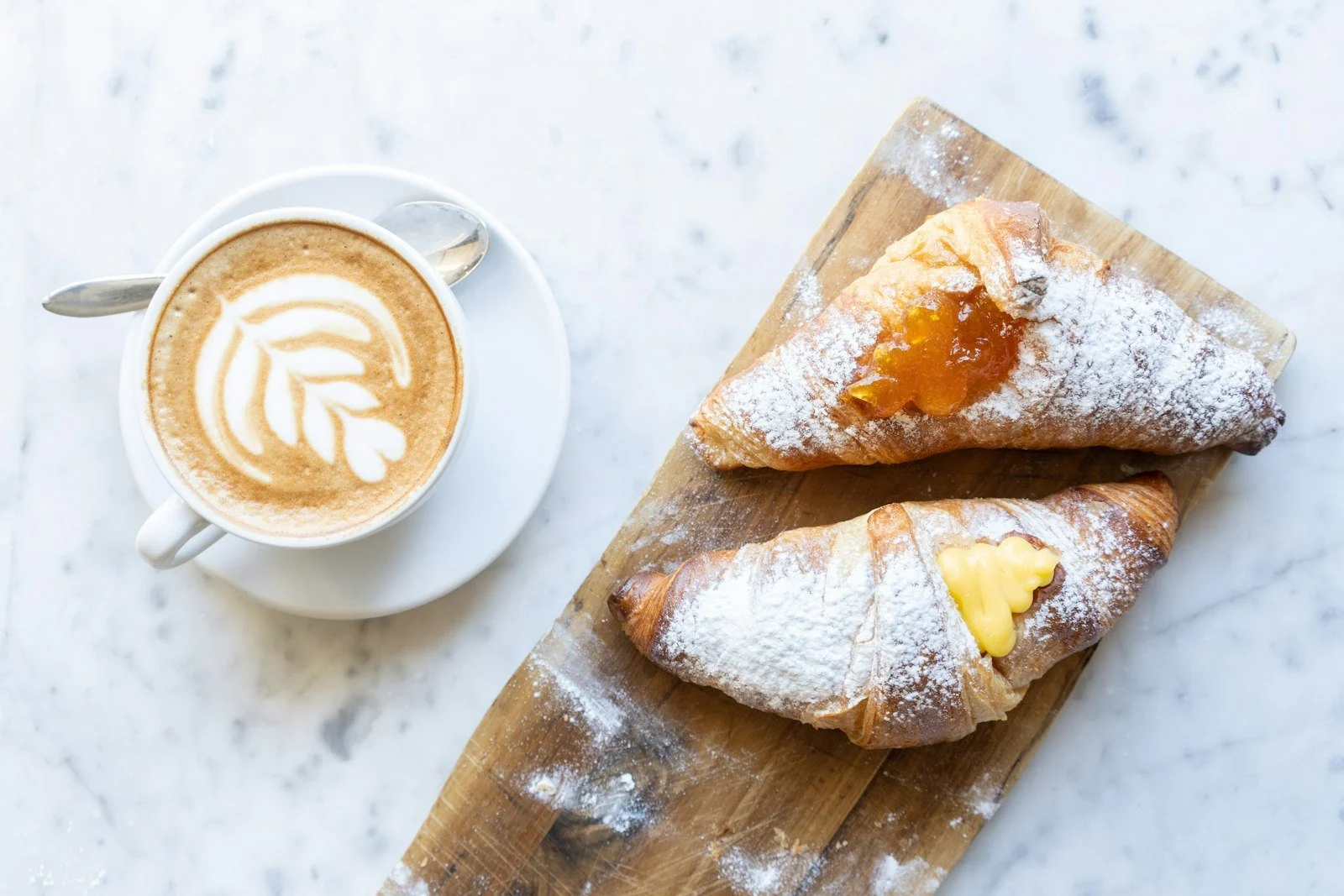
A cornetto is not a croissant, though it looks like one. The Italian dough contains eggs and more sugar, so it is softer and sweeter than the French version. In the north, in and around Milan, it is called a brioche; ask for a “cornetto” in a Milan café and you will be understood, but you will sound Roman.
One rule saves money: cafés nearly always have two prices — at the counter (al banco) and at a table (al tavolo), and the table price can be noticeably higher. Prices must be on display, so glance at the board before you sit down. With a small child, sitting is of course easier — just know what you are paying for.
In winter, ask for a spremuta d’arancia, freshly squeezed orange juice. From late December into spring it is often made with Sicilian blood oranges — the Moro variety arrives first, and the Tarocco peaks in January. Children are fascinated by juice the colour of pomegranate.
In two regions breakfast is something else entirely. In Genoa people dunk focaccia in their cappuccino — seriously, not as a tourist joke. In eastern Sicily, from May to October, breakfast is granita with a brioche: crushed ice flavoured with almond, coffee or fruit, and a soft bun with a little topknot (col tuppo) that you use to scoop it up. For a child, go for almond or strawberry; the coffee one can contain real espresso.
What to try, region by region
Italian cooking is not one cuisine but twenty regional ones, and what Rome sells on every corner may not exist in Milan at all. Below are the dishes children actually eat, and what the letters on packets and menus mean.
The abbreviations in brief. DOP (PDO) — the whole product is made in its home region to approved rules. IGP (PGI) — at least one stage of production takes place in the region. STG (TSG) — the traditional recipe is protected, but it can be made anywhere. De.Co. — a “municipal name”: the city itself fixes the recipe of its own dish.
| Where | What | What it is | Status |
|---|---|---|---|
| Rome | pizza al taglio | tray-baked pizza, cut to size and sold by weight | — |
| Rome | supplì | fried rice ball with mozzarella inside | — |
| Rome | maritozzo | sweet bun filled with whipped cream | — |
| Milan | cotoletta alla milanese | bone-in breaded veal chop fried in butter | Milan De.Co. since 2008 |
| Milan | risotto alla milanese | yellow saffron risotto | Milan De.Co. |
| Bologna | mortadella | cooked pork sausage studded with fat | Mortadella Bologna IGP |
| Romagna | piadina | thin flatbread folded over a filling | Piadina Romagnola IGP |
| Liguria | focaccia di Recco | paper-thin dough with soft cheese inside | IGP since 2015 |
| Liguria | farinata | thin chickpea-flour pancake | gluten-free by recipe |
| Florence | schiacciata | flat bread with olive oil and salt | — |
| Venice | scartosso | fried fish and seafood in a paper cone | — |
| Puglia | panzerotto | fried turnover with mozzarella and tomato | — |
| Sicily | arancine / arancini | large rice ball with ragù or cheese | — |
| Sicily | granita | crushed ice with almond, fruit or coffee | — |
Rome. Pizza al taglio grew out of Rome’s bakeries in the second half of the 20th century: a tray of pizza sat next to the bread and was sold the same way, by weight. Point at a slice, say how much to cut, and it will be weighed and warmed up. The simplest and most Roman is pizza bianca, “white” pizza with no tomato, just oil and salt; split lengthways with mortadella inside, it is called “pizza e mortazza”, and children like it more than any sandwich. Supplì are oblong fried balls of rice in tomato sauce with mozzarella inside. Break one open and the cheese pulls into strings, which is why Romans call it “supplì al telefono” — like the cord of an old telephone. The popular story is that the name comes from the French “surprise”, from the days of Napoleon’s troops in Rome, and a Roman trattoria menu from 1874 lists it as “soplis”. The maritozzo is a bun split open and stuffed with whipped cream; the name comes from marito, “husband”: in the 19th century a young man gave one to his fiancée on the first Friday in March, sometimes with a ring hidden inside. Today maritozzi are eaten for breakfast all year round.
Milan. Cotoletta alla milanese is the north’s great “children’s” dish, though your child will hardly notice: it is simply a cutlet in golden breadcrumbs. In March 2008 the City of Milan gave it a municipal De.Co. name, and the recipe it protects has the bone in: veal loin, egg, breadcrumbs, fried in butter — no flour. That is why the rules call it costoletta, from costola, “rib”. Restaurants often also serve a thin, boneless version beaten out to the size of the plate, known as “elephant’s ear”, orecchia d’elefante — and children order it for the name alone. Risotto alla milanese is yellow with saffron, soft and mild, and usually goes down well with children who like porridge. There is a legend that the cathedral’s own works office, the Veneranda Fabbrica, tells: in the 16th century, a glazier’s apprentice on the building site of Milan Cathedral, nicknamed Saffron because he added saffron to his glass paints, coloured the rice at a wedding with it. It is a legend, but after a visit to the cathedral a child will remember it. How to fit meals into a day in Milan is in our route what to see in Milan in one day.
Bologna and Romagna. Mortadella is a delicate cooked pork sausage studded with little cubes of fat; in Bologna it is sliced into thin ribbons and children eat it like crisps. Since 1998 it has been protected as Mortadella Bologna IGP. This is also the moment to tell your child that nobody in Bologna eats “spaghetti bolognese”: here the ragù comes with tagliatelle, and tortellini are served in broth. Piadina is a thin unleavened flatbread from Romagna, cooked on a griddle and folded over ham, cheese or the soft cheese squacquerone. Since 2014 it has been Piadina Romagnola IGP, and only Romagna may make it under that name — along the coast from Rimini to Ravenna there is a piadina kiosk on every corner.
Liguria. Genoese focaccia is soft and oily, dimpled by fingertips and scattered with coarse salt; it is eaten at any time of day, and bakeries sell it by the piece the way Rome sells pizza. Its cousin from the town of Recco is focaccia di Recco col formaggio: two paper-thin sheets of dough with melting fresh cheese in between. It has been an IGP since 2015, and its rules forbid selling it under that name frozen or pre-baked. Farinata is a thin pancake made from chickpea flour, water, oil and salt, with no wheat in the recipe. It can work for a child with coeliac disease, but ask whether the bakery uses a separate tin, as focaccia often goes in the same oven. And of course there is pasta with pesto — trofie or trenette; we mentioned the pine nuts above.
Florence. Instead of focaccia, Florence has schiacciata — thinner, flatter and drier, with olive oil and salt. Florentines split it and fill it with prosciutto or mozzarella, and it makes the easiest lunch for a child on a walk. In September and October bakeries sell a sweet schiacciata with grapes.
Venice. Here people eat standing up: the bacari bars sell cicchetti, one-bite snacks, and children usually end up with polpette, fried meat or fish balls. Easier still is scartosso, a paper cone of fried squid, prawns and small fish, eaten on the move like chips. What works with food and children in Venice and what does not is in our article Venice with children.
Naples and the south. Neapolitan pizza is a big subject of its own; suffice to say that since 2010 it has held the EU status Pizza Napoletana STG. Further south, in Puglia, children love panzerotti — fried turnovers of pizza dough filled with mozzarella and tomato, scalding inside: give one a minute to cool before handing it over.
Sicily. Arancini are bigger than supplì and come with different fillings: ragù with peas, ham with mozzarella, spinach. In Palermo they are feminine, arancine, and round like an orange — hence the name; in Catania they are arancini and cone-shaped, and people joke that it is Etna. On 13 December, St Lucy’s Day, Palermo eats no bread or pasta but gets through millions of arancine. In summer there is granita, and all year round cannoli: crisp tubes filled with sheep’s-milk ricotta cream, piped in while you wait if the pastry shop is a good one.
In winter: from panettone to carnival fritters
If you are in Italy between December and February, food has its own calendar, and a child will grasp it more easily than any museum.
Panettone and pandoro. Christmas cakes are piled high in every supermarket, and their recipe is a matter of law, not taste. A ministerial decree of 22 July 2005 requires panettone to contain at least 16% butter and at least 20% raisins and candied peel. If it has no raisins or peel, the name must say so. Pandoro from Verona has no raisins or peel, at least 20% butter, and by law must be a truncated cone with an eight-pointed star in cross-section. For a child who picks out raisins, pandoro — and they can shake on the icing sugar from the sachet in the box themselves.
La Befana, 6 January. On the night before Epiphany the kindly witch Befana brings sweets in a stocking to good children and coal to naughty ones. The “coal” is sold in pastry shops: a black sugar sweet called carbone dolce, and Italian children adore it.
Carnival. After Epiphany the pastry shops fill with crisp fried ribbons of dough, and every region has its own name for them: chiacchiere in Milan and Naples, frappe in Rome, cenci in Florence, galani in Venice. Next to them are castagnole — fried dough balls the size of a walnut. In 2027 the last day of carnival is 9 February. In Milan, which follows the Ambrosian rite, carnival ends later, on Saturday 13 February.
One more winter reminder: the coperto on the bill and tipping work the same all year round; how much to leave, and for whom, is in tipping in Italy.
Cooking it yourselves
What children enjoy most is not eating a pizza but making one: rolling out the dough, arranging the topping and watching it bake. It is a good plan for a day when nobody wants to walk round the city any more.
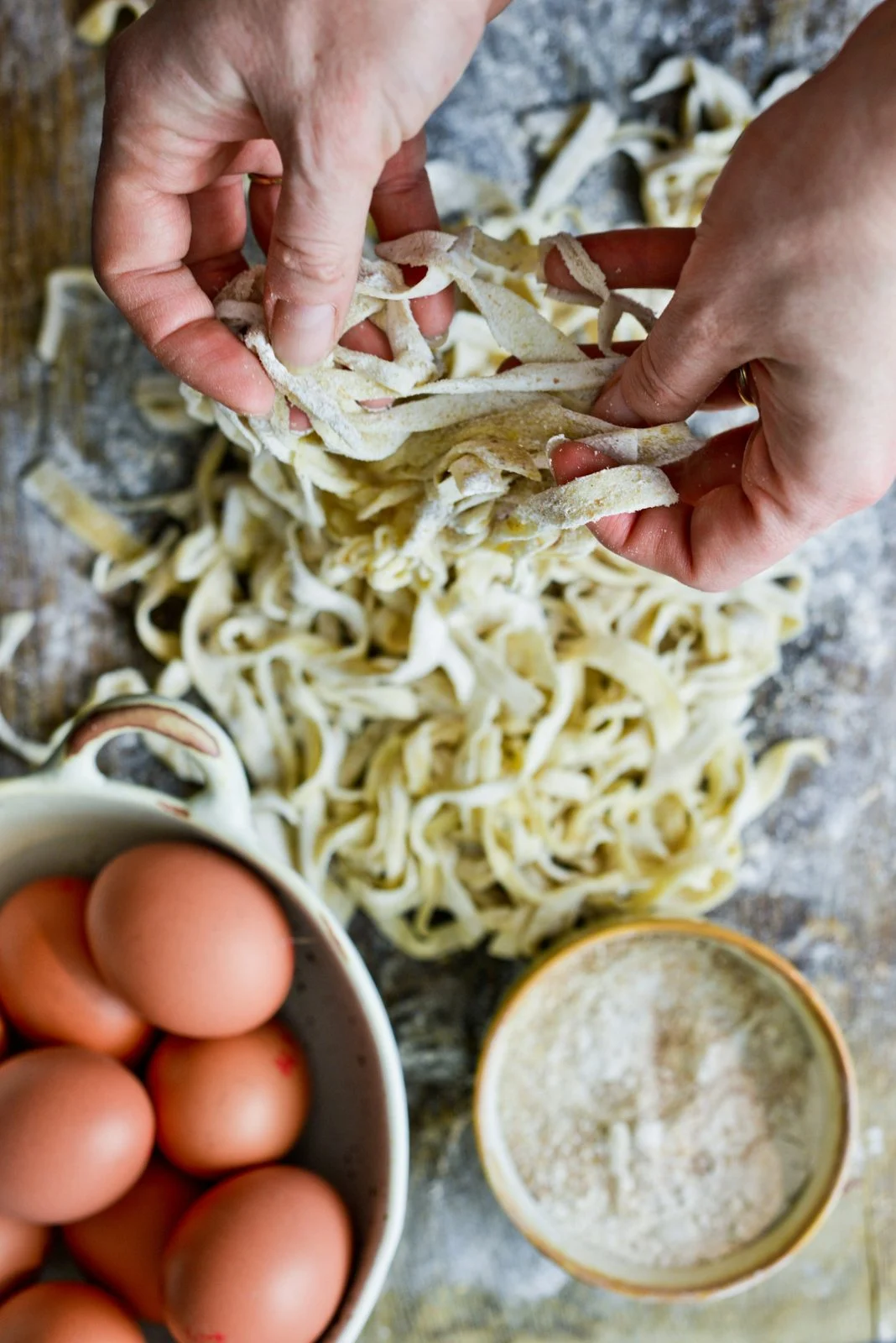
Pizza and gelato cooking class in Florence
A cookery studio in central Florence and a chef who shows you how to knead a thin, elastic dough and make a homemade tomato sauce. Children shape and top their own pizza, then make gelato from natural ingredients with the chef and find out how it differs from ordinary ice cream. At the end you taste what you have made and take home a recipe booklet to try it again.
EUR 95 per group of up to 5 · 3 hours
We run similar classes in other cities too: pizza and gelato in Rome and pizza and gelato in Milan.
Frequently asked questions
What should a child try first in Italy?
Things you eat with your hands and that hold no surprises: pizza al taglio by weight in Rome, supplì and arancini rice balls, cotoletta alla milanese, focaccia in Liguria, piadina with ham in Romagna, panzerotti in Puglia — and for breakfast a cornetto with hot chocolate. In summer in Sicily, granita with a brioche bun.
Do Italian restaurants have a children's menu?
Trattorias usually do not; pizzerias and family restaurants sometimes do. It is not a problem: you can ask for a half portion (mezza porzione), share one dish between two, or order pasta without sauce. Where there is a children’s menu, it nearly always has pasta with tomato, a breaded cutlet with chips and frankfurters.
What is pasta in bianco and how do I order it?
Pasta without sauce — with butter or olive oil and grated Parmesan. Say “pasta in bianco, per favore”. Almost any trattoria will make it, even if it is not on the menu. For something a little more interesting, “pasta al pomodoro” comes with a simple tomato sauce.
What time do Italians have lunch and dinner?
Lunch runs from about 12:30 to 14:30, and in Rome many kitchens stay open until 15:00. Dinner starts at 19:30, though locals sit down nearer nine, and later still in the south and in summer. Between lunch and dinner a hot meal is hard to find; pizza by weight, focaccia, cafés and aperitivo fill the gap.
What is the difference between arancini and supplì?
Supplì are Roman: oblong, with rice in tomato sauce and mozzarella that pulls into strings. Arancini are Sicilian and bigger, filled with ragù and peas, ham or cheese. In Palermo they are feminine, arancine, and round; in Catania they are arancini, shaped like a cone.
Can a child with coeliac disease eat gluten-free in Italy?
Yes — it is one of the easiest countries for it. The Italian Coeliac Association, AIC, has trained more than 4,000 restaurants and cafés, listed in its AIC Mobile app; visitors can buy a 15-day Welcome version for EUR 3.99. Restaurants must also tell you about 14 allergens, gluten included — just ask the waiter.
What is the difference between panettone and pandoro?
The recipe, and it is set by a 2005 decree. Panettone must contain at least 20% raisins and candied peel and at least 16% butter. Pandoro has no raisins or peel, at least 20% butter, and is shaped like a truncated cone with a star-shaped cross-section. If your child picks out raisins, buy pandoro.