Contents 6
The Roman eating timetable
The main thing that breaks plans: the kitchen does not work all day.

- Breakfast — coffee and a cornetto standing at the bar, 8:00–10:00. Full breakfasts in our sense are not served here.
- Lunch — 12:30–15:00. After three the kitchen closes.
- Dinner — from 19:30, with locals sitting down closer to nine.
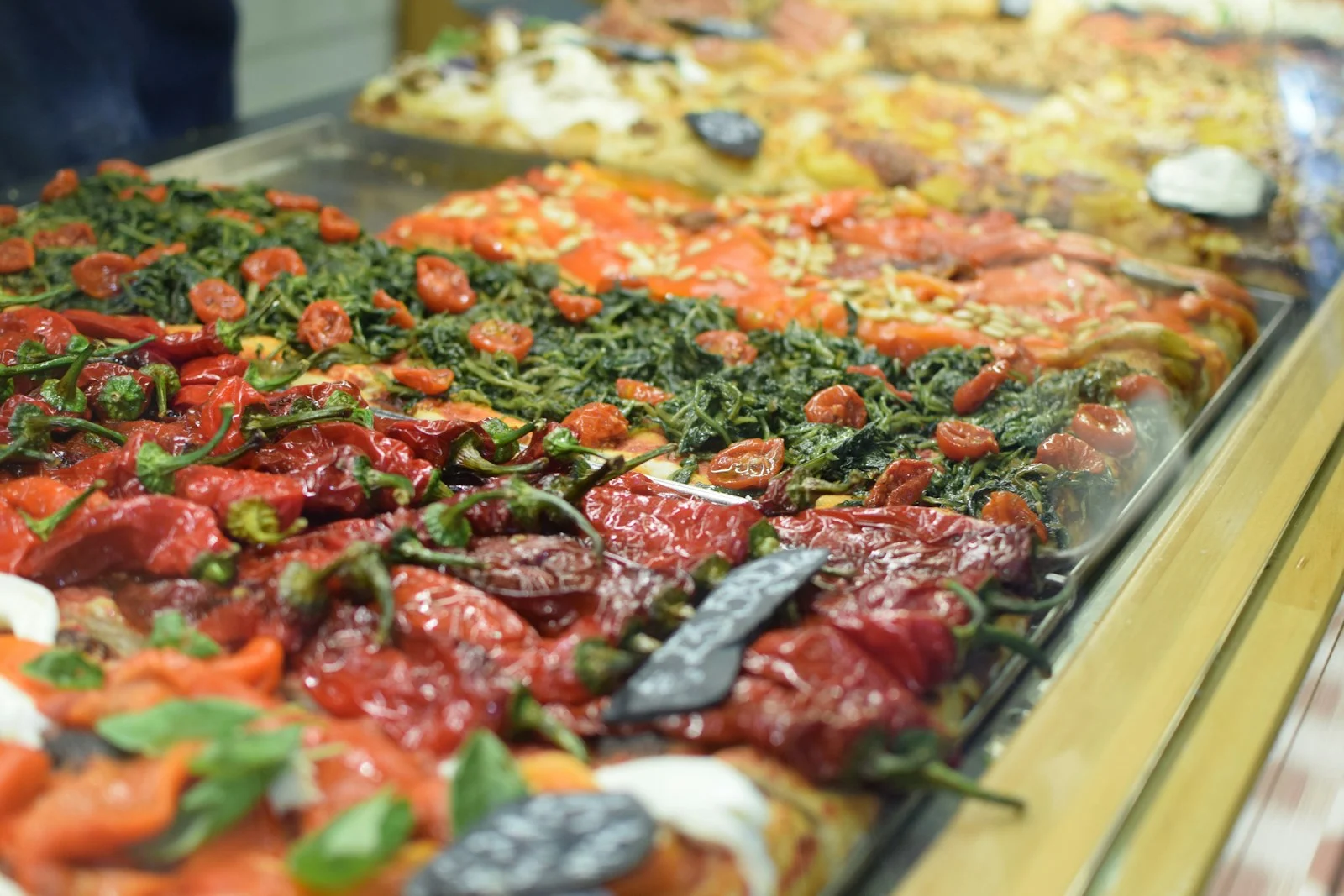
Between lunch and dinner there is a window when no hot food is to be found. For a family the answer is pizza al taglio — sold by weight, all day long.
And the reverse signal: a place serving a full dinner at six in the evening is aimed at tourists. Not necessarily bad, but definitely not local.
Coperto and how to read the bill
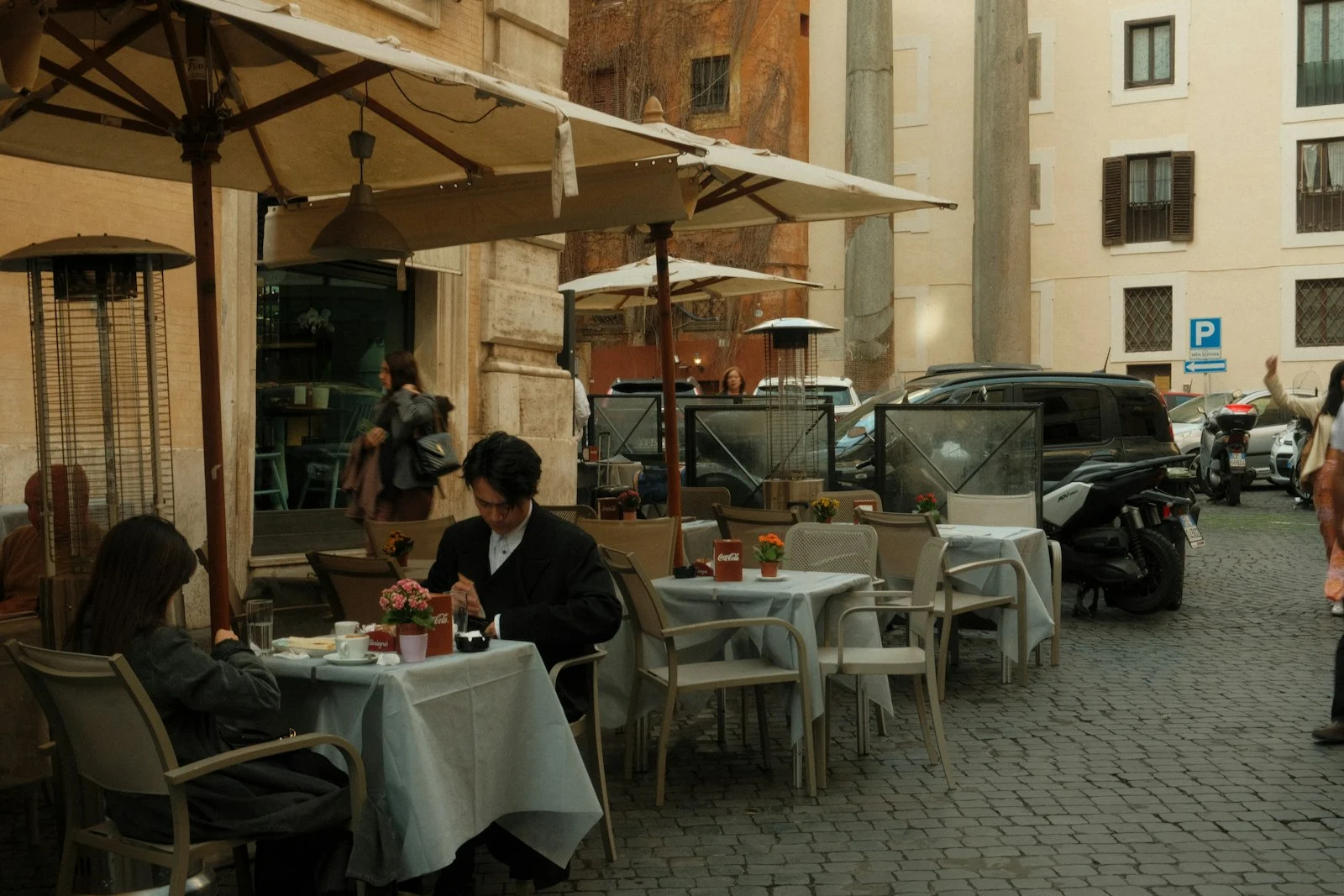
There is almost always a line reading coperto — EUR 1.5–3 per person. It is a charge for the table, the cutlery and the bread; it is legal and must be printed on the menu. It counts per person seated, children included.
If there is a coperto, no tip on top is needed — rounding up is enough. Sometimes you see servizio instead, a service percentage; then there is certainly nothing to add.
How to spot a trap in ten seconds
Three signs, and they work across the centre:
- Someone touting at the door. A proper Roman place does not need to catch people in the street.
- A menu in six languages with photographs of the dishes. The more photographs, the worse the food.
- An address right on a square with a view of a monument. You are paying for the view, and paying twice.
The rule that works: walk two or three blocks in any direction. No app required.
What to order for a child
Trattorias usually have no children’s menu, and that is not a problem: they will do a half portion, split one dish between two, or cook pasta simply with butter and cheese. Asking for this is normal.
What nearly always works:
- Pizza margherita — the basic one, available everywhere.
- Cacio e pepe — pasta with cheese and pepper, a Roman classic made of two ingredients. If your child will not eat pepper, ask for pasta in bianco: the same pasta with butter and cheese.
- Pizza al taglio — by the slice, by weight; you point, they cut as much as you need. Ideal when everyone is hungry and there is no time to sit down.
- Supplì — a fried rice ball with mozzarella inside. Roman street food that children eat in silence.
What to avoid with small children: carbonara and amatriciana — plenty of pepper and salty guanciale.
Where to look in the centre
We deliberately do not name individual places: they change, and the advice goes stale within a season. Instead, the districts where decent food concentrates:
- Trastevere — the quarter across the river. Plenty of tourists, but plenty of real trattorias too.
- Monti — between the Colosseum and the station, beyond Via Cavour. Five minutes from the Forum and quite different prices.
- Testaccio — a former working-class district with a market, where locals go for Roman cooking.
- The lanes around Piazza Navona — the square itself is expensive, two blocks away it is not.
Water and gelato
Do not buy water: the city has more than two thousand nasoni drinking fountains with cold, drinkable, free water. A bottle by the Colosseum costs EUR 3, in a shop round the corner 50 cents.
Gelato: the real thing is never bright lime-green and is not piled in mountains above the tub — that has been pumped with colouring and stabilisers. A good gelateria keeps its ice cream in closed metal tubs, and its pistachio is greyish, not green.
How much to budget for food a day and what costs what is counted separately: how much money to bring to Rome.
Pizza and gelato workshop in Rome
Two hours in a real kitchen: children roll out dough, build their own pizza and make gelato, then eat all of it. An option for the day when nobody will walk on cobbles any more.
EUR 75 per person · 2 hours · up to 6 people · a Russian-speaking interpreter is EUR 70
Frequently asked questions
Is there a children's menu in Rome
Almost nowhere. But any trattoria will do a half portion of pasta or split one dish between two without discussion — you only have to ask.
What time do Romans have dinner
Kitchens open around 19:30 and locals sit down closer to 21:00. A place serving dinner at six in the evening is almost certainly aimed at tourists.
What is coperto on the bill
A charge for the table, cutlery and bread, usually EUR 1.5–3 per person. It is a legal item and must be shown on the menu. If there is a coperto, no tip on top is needed.
How do I spot a tourist trap
Three signs: a tout at the door, a menu in six languages with photographs, and a location right on a square with a monument. Two or three blocks away the price halves.
What to order for a child who eats nothing
Pizza margherita, cacio e pepe or plain pasta with butter and cheese, pizza al taglio by weight. These are basic dishes, available everywhere and not frightening.