Contents 7
What matters to a family rather than a couple
What to check before you book:
- A metro station five to seven minutes away. Not to save money: a 25-minute walk home with a tired child turns into a taxi.
- Quiet after eleven. Children fall asleep just as Rome sits down to dinner, and you hear it through the window.
- A lift. More on this below — it is the main catch in old Rome.
- Air conditioning in every bedroom, not just “in the flat”. From June to September a child will not sleep without it.
- Cobblestones. Rome’s sampietrini are worse than steps for a pushchair. In Prati and around the station the pavements are wide and even.
Seven neighbourhoods, honestly
| Area | Metro | At night |
|---|---|---|
| Centro Storico | none; Spagna is 15 minutes’ walk | noisy around Campo de’ Fiori |
| Monti | Cavour (B) | lively around the square |
| Prati | Ottaviano, Lepanto (A) | quiet |
| Trastevere | none; tram 8 | noisy until late |
| Esquilino, Termini | Termini (A and B), Vittorio Emanuele (A) | uncomfortable near the station |
| Spanish Steps, Tridente | Spagna, Flaminio (A) | calm |
| Aventine, Testaccio | Circo Massimo, Piramide (B) | quiet |
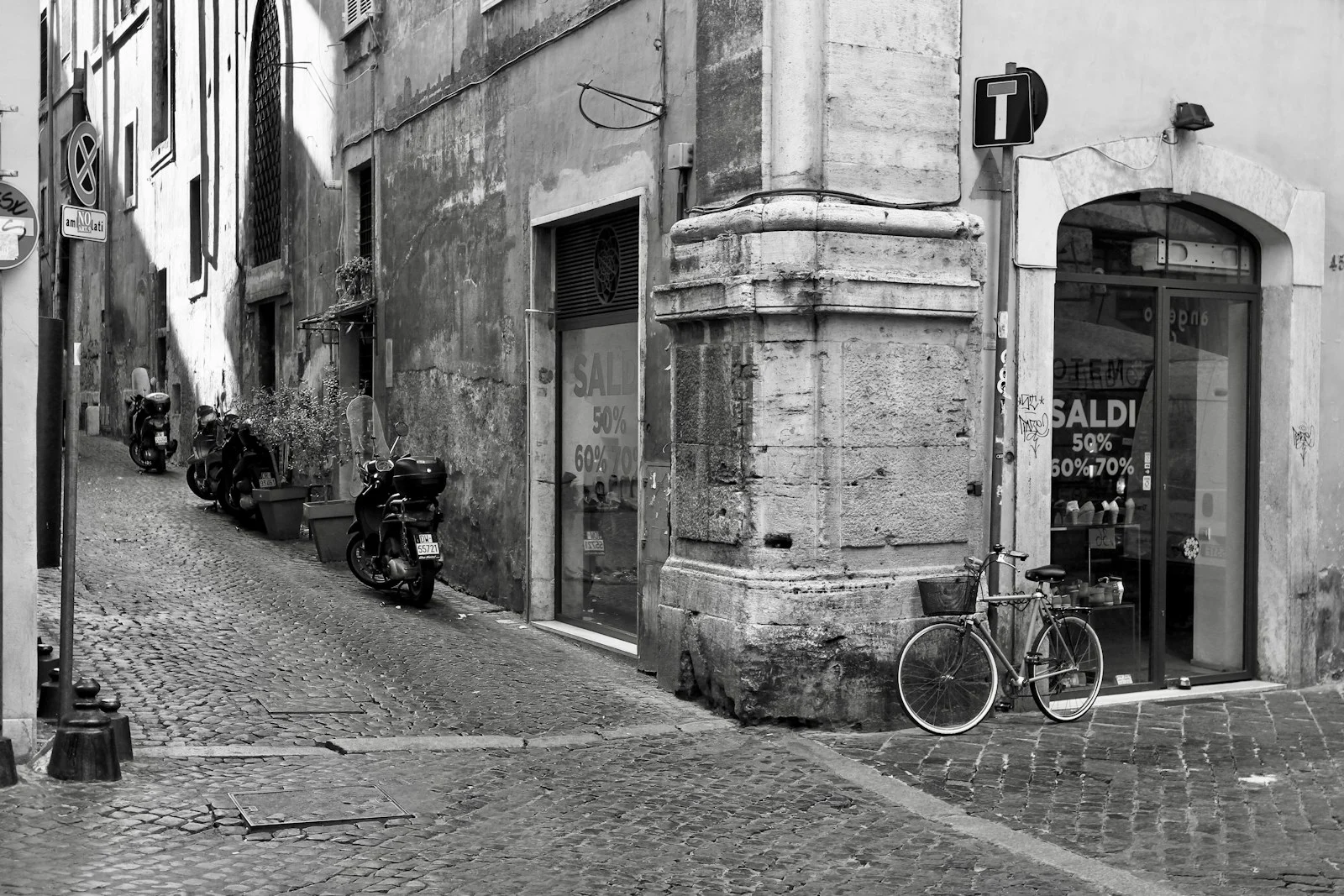
Centro Storico. The Pantheon, Piazza Navona and Campo de’ Fiori are five minutes apart, and everything is on foot. The downsides are here too: it is expensive, the streets are cobbled, and the nearest stations, Spagna and Barberini, are a quarter of an hour from the Pantheon. A line C station at Piazza Venezia is being built and will not open before the early 2030s. In the evening Campo de’ Fiori becomes an open-air bar: if you stay here, stay nearer Navona with windows onto a courtyard.
Monti. An old quarter between the Colosseum and the station. The Colosseum is a ten-minute walk, and Cavour station on line B is inside the area. Plenty of trattorias for locals and no theme-park feel. The downsides: it sits on a hillside, so the streets go up and down, and in the evening Piazza della Madonna dei Monti draws a young crowd onto the fountain steps. Do not stay on the square itself — a couple of streets away it is noticeably quieter.
Prati. Built after Rome became Italy’s capital, and it shows: straight, wide streets, even pavements, late 19th-century buildings with generous staircases. Two line A stations, Ottaviano and Lepanto, and the Vatican ten minutes’ walk away. In the evening the area belongs to Romans rather than tourists. The one downside: you will need to ride to the Colosseum and Trastevere. With a pushchair, Prati is our choice. How the metro works and why you should check station lifts the night before is covered in our guide to the Rome metro, tickets and stations.
Trastevere. The loveliest evenings in Rome and the noisiest nights. There is no metro: tram 8 runs to Piazza Venezia, but the line often has engineering works and buses replace the tram. A plus few people know: in the south of the area is Roma Trastevere station, served directly from Fiumicino by the FL1 train. Where to walk and when to head home with a child is in our piece on Trastevere in the evening.
Esquilino and Termini. The best spot for logistics: both metro lines, trains to Florence and Naples, the airport express and airport buses. And honestly: a station district is still a station district. In the evening Termini and the streets south of it feel uncomfortable. We would stay here for one night before an early train, and closer to Repubblica station than to Piazza Vittorio.
Spanish Steps and Tridente. Three straight streets fanning out from Piazza del Popolo, the best shops and the most expensive hotels. Calm in the evening, with Spagna and Flaminio stations nearby, and the climb up the Pincio brings you into Villa Borghese with its boating lake and zoo. The downside is price: Prati has the same metro line for noticeably less.
Aventine and Testaccio. The Aventine is a quiet hill of villas and the Orange Garden, with little accommodation. Testaccio below it is a proper Roman neighbourhood with a covered market where locals have lunch; the market is closed on Sundays. Piramide station on line B, and next to it Ostiense station with the same FL1 from the airport, plus the train to the sea at Ostia — in summer that is half a day on the beach without a car. The downside: the Pantheon is more than half an hour on foot.
Lifts and floors: the main catch in old Rome
In buildings three hundred years old there is often no lift at all. Where there is one, it was usually squeezed into the stairwell later: a cabin for two, and a pushchair only goes in folded.
The second trap is how floors are counted. The Italian piano terra is the ground floor and primo piano is the first floor up, as in the UK. But between them there may be a piano rialzato, raised a few steps, and an ammezzato, a mezzanine. A “third floor, no lift” in a Roman listing can easily mean five flights with suitcases, and with four-metre ceilings every flight is a long one.
What to ask the host before you pay: is there a lift (ascensore), which floor does it start from, and how many steps are there from the front door to the cabin.
Flat or hotel
With children we usually lean towards a flat: a separate room where the adults can sit once the children are asleep, a washing machine and a kitchen. A hotel is simpler for two or three nights or a late arrival.
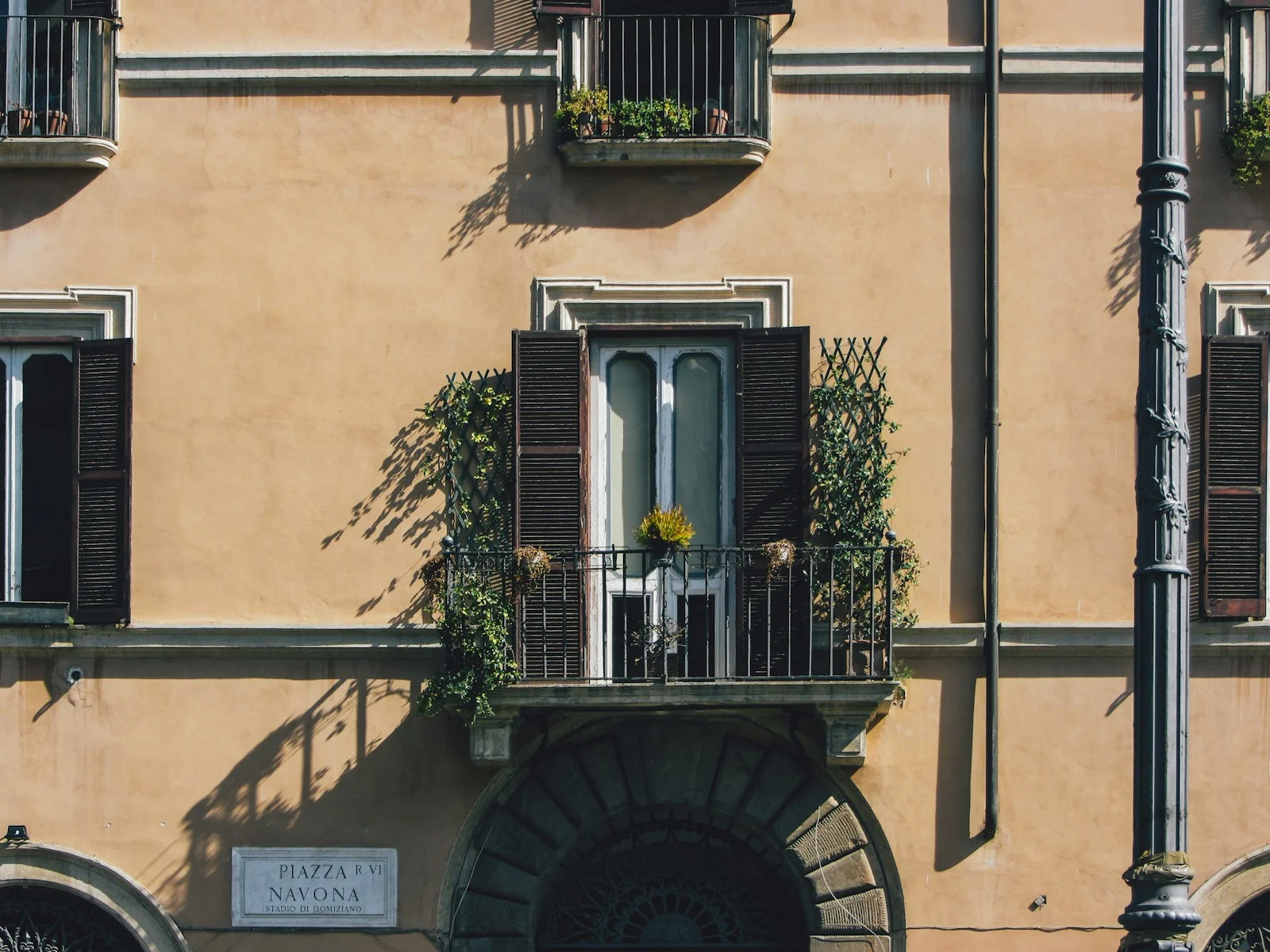
Two checks for a flat. First, the CIN code in the listing: since 2025 it has been compulsory for every property let to tourists in Italy, and booking sites must display it in the listing. No code is a reason to be wary. Second, heating if you travel between November and April. In Rome’s apartment blocks it is, as a rule, switched on from 1 November to 15 April and for no more than 12 hours a day, and the mayor can move the dates: in autumn 2024 the radiators only came on on 15 November. Ask whether the air conditioning can heat — on a cold evening it saves the day.
The tourist tax: how much and from what age
Rome charges a contributo di soggiorno per guest per night, for a maximum of ten consecutive nights in the same place. The rates have applied since 1 October 2023 and were unchanged on the date we checked:
| Where you stay | Per person per night |
|---|---|
| Hotel 1* / 2* / 3* | EUR 4 / 5 / 6 |
| Hotel 4* | EUR 7.50 |
| Hotel 5* | EUR 10 |
| Short-let flat, B&B | EUR 6 |
| Holiday apartments (case vacanze) | EUR 6 or 5 by category |
| Guest house, rooms (affittacamere) | EUR 5–7 by category |
| Hostel | EUR 3.50 |
| Campsite | EUR 3, maximum 5 nights |
Children under 10 pay nothing; from ten they pay the adult rate — there is no teenage rate. The exemption is not automatic: you have to mention the child at check-in. Two adults and children of 7 and 12 for five nights in a 4-star hotel: 3 × 7.50 × 5 = EUR 112.50; in a flat, EUR 90. Many guides give EUR 7 for four stars, but the city’s table says 7.50. The tax is often not included in the booking price and is collected on arrival.
If you are driving
The historic centre, including the Tridente, and Trastevere are restricted traffic zones (ZTL). Cameras at the entry points record your number plate, the fine goes to the hire company, and it passes it on to you, usually with a fee. The daytime ZTL in the centre runs on weekdays from 6:30 to 18:00 and on Saturdays from 14:00 to 18:00; the night ZTL runs on Fridays and Saturdays from 23:00 to 3:00.
With a car we would stay outside the zone, in Prati for example. If your accommodation is inside the ZTL, ask the host before booking how they handle access.
If you…, then…
- Have a pushchair or a child under five — Prati: even pavements, quiet evenings, line A.
- Have older children and a plan built around the Colosseum and the Forum — Monti.
- Have an early train or flight — one night at Termini, closer to Repubblica. Which way to get to the airport and when a taxi makes sense is in our guide on getting from Rome’s airports to the centre.
- Love long evenings and sleep soundly — Trastevere, but on a side street rather than the square.
- Have a week and want to live like a local — Testaccio: the market, the quiet and the train to the sea.
- Have no budget limit — the Tridente, with Villa Borghese across the road.
We run quest-style tours of Rome for children — see all our Rome routes here.
Frequently asked questions
Which area of Rome is best to stay in with children?
With small children and a pushchair, Prati: wide, even pavements, quiet evenings and two line A stations next to the Vatican. With older children who walk a lot, Monti, which is a ten-minute walk from the Colosseum.
Do children pay the tourist tax in Rome?
Children under 10 are exempt, but you have to mention them at check-in — the exemption is not applied automatically. From the age of ten a child pays the adult rate; there is no separate children’s rate.
How much is the tourist tax in Rome?
EUR 3 to 10 per person per night depending on the accommodation: EUR 6 in a 3-star hotel and in a short-let flat, EUR 7.50 in a 4-star, EUR 10 in a 5-star. It is charged for a maximum of 10 consecutive nights in the same place.
Is it safe to stay near Termini station with children?
It is not a dangerous area, but in the evening the station and the streets south of it feel uncomfortable. It works for one night before an early train or flight; for the whole trip we would choose another neighbourhood.
Is Trastevere a good place to stay with a family?
In the evening it is the best quarter in Rome, but the streets stay noisy until late and there is no metro — tram 8 runs into the centre. If you choose Trastevere, pick a quiet side street away from Piazza di Santa Maria.
Flat or hotel in Rome with children?
For a week, a flat: a separate room for the adults once the children are asleep, a washing machine and a kitchen. For two or three nights, or a late arrival, a hotel with a 24-hour desk is simpler.
Can I drive to my accommodation in central Rome?
The historic centre and Trastevere are ZTL zones with cameras at every entry, and the fine reaches you through the hire company. If your accommodation is inside the zone, ask the host in advance how they handle access, or choose an area outside it, such as Prati.