Contents 9
- The main principle: pack what you cannot replace
- Clothes and shoes: cobbles, sun and churches
- Small things that save the day
- Car seats and pushchairs
- A home first-aid kit: the short list
- Can you bring your own medicines?
- What to buy in an Italian pharmacy without a prescription
- Pharmacies at night and at weekends: farmacia di turno
- If you need a doctor
Documents and what to have with you on the plane are covered separately in flying with a child: documents and what to take on board. This article is only about the suitcase and the first-aid kit.
The main principle: pack what you cannot replace
Italy is not a country where things are hard to find. There are supermarkets, pharmacies and children’s shops in every town, and a pharmacy has everything for little ones, from formula to nappy cream. So pack not on a “just in case” basis but by asking three questions:
- Would the first evening go wrong without it? You land late, the nearest pharmacy is shut and your child has a temperature. So the fever reducer and thermometer come from home.
- Is it hard to replace? Shoes your child can walk in without blisters, a favourite cup or bedtime toy, a medicine your doctor prescribed. None of these can be bought in five minutes.
- Would it take up half the suitcase when it is sold everywhere? A pack of nappies, bottles of shampoo, a big tube of sun cream. Bring enough for a day or two and buy the rest.
Clothes and shoes: cobbles, sun and churches
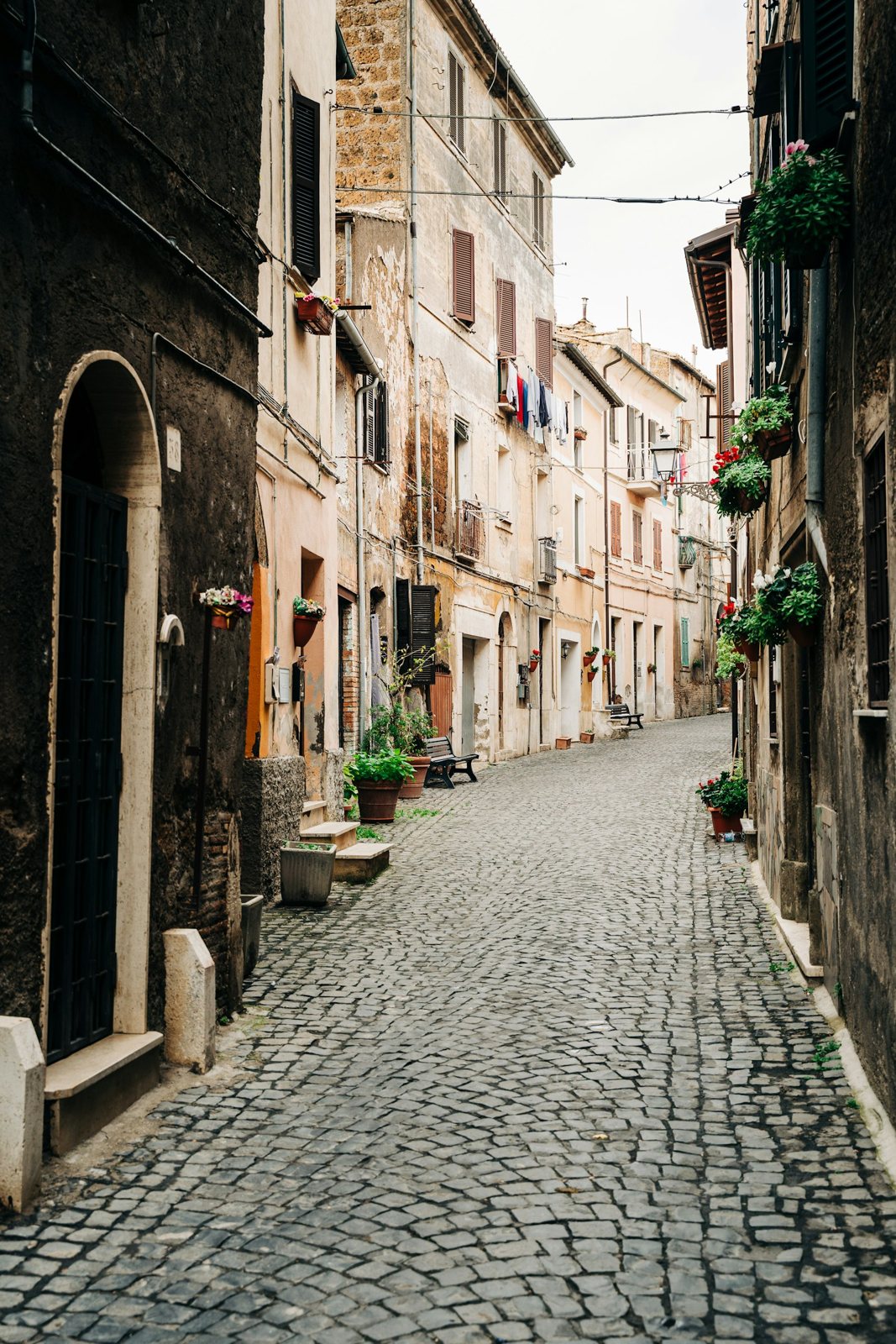
Shoes matter more than anything else. Central Rome is paved with sampietrini — small basalt blocks with gaps between them; Florence and Venice have stone slabs, and Venice adds bridge steps every hundred metres. On a day on these streets an adult walks 10–15 kilometres, and a child not much less. You need broken-in trainers or closed-toe sandals with a firm sole. If you are buying new shoes “for the trip”, get them a month ahead and wear them in at home, not at the Colosseum. Keep flip-flops for the beach and the hotel: on cobbles they are tiring and easy to trip in, and Florence’s cathedral does not let you in wearing them.
A sun hat in summer is a must. In July and August Rome and Florence are often above 30 °C by day, with little shade on the squares. A cap or a wide-brimmed hat, child-size sunglasses and a bottle you can refill for free: drinking fountains run all over Rome, as we explain in Rome’s nasoni: where to get free drinking water.
A scarf or light cardigan for churches. At St Peter’s, Florence’s Duomo and St Mark’s in Venice, staff at the entrance check that shoulders and knees are covered, and this applies to children too. At St Mark’s, men and boys are also asked to take their hats off. The easiest fix is a thin scarf in your day bag to wrap round the shoulders, and knee-length shorts for boys. The Vatican rules in detail are in St Peter’s Basilica: how to get in and respect the dress code.
In winter and the shoulder seasons pack layers rather than one heavy coat: it can be damp and windy outside, hot in a museum and cool again in a church. Waterproof shoes are especially useful in Venice in November and December, when acqua alta comes in. What to do about it with a child is in Venice with children: what works and what does not.
Small things that save the day
- A plug adapter. Italy runs on 230 V, with type F sockets (as in most of continental Europe) and type L, which has three round pins in a row. A slim two-pin charger plug usually fits both, but a thick earthed plug will not go into a narrow type L socket, and UK or US plugs need an adapter anyway. One universal adapter per family ends arguments about whose phone charges first.
- A small day bag big enough for water, a snack, the scarf, wet wipes and a bag for rubbish. There are bins in the centre, but not always where you need them.
- Wet wipes and hand sanitiser. Italian cities have few public toilets; people usually use the one in a café where they have ordered at least a water.
- A night light or familiar bedtime toy if your child struggles to sleep somewhere new. That is the one thing you cannot replace on the spot.
- Copies of prescriptions and your insurance policy — photos on your phone and a paper copy in the suitcase.
Car seats and pushchairs
If you will only use trains and taxis, there is no need to bring a car seat. Under Article 172 of the Italian Highway Code, in a taxi or a pre-booked car with driver a child under 150 cm may travel without a seat, provided they sit in the back with a passenger aged 16 or over. The law allows it, but a seat is of course safer: with a small child, ask when booking a transfer or taxi whether they can send a car with one.
In a hire car the rules are stricter. A seat or booster suited to height and weight is compulsory for every child under 150 cm. And for children under four, a car with Italian plates must also have an anti-abandonment alarm — a device that sounds if the driver walks away while the child is still in the seat. The rule depends on the car, not the driver’s nationality, so it applies to hire cars as well. The fine for a missing seat or alarm is EUR 83 to EUR 332. When booking, ask whether the hire company’s seat has the alarm, and if you are bringing your own seat, buy an alarm before you go.
Whether to bring a pushchair depends on the city. In Rome you can manage with one, though not everywhere — we cover where it works and where not to try in Rome with a pushchair. In Venice, with hundreds of stepped bridges, a carrier or a light folding buggy you can carry in one hand is often easier for a child under two or three.
A home first-aid kit: the short list
The kit from home is for the first night and for the things you and your child already know work. Everything else is in an Italian pharmacy.
- Anything your child takes regularly — enough for the whole trip and a little more, in the original packaging, with a prescription or doctor’s letter. It helps if the letter gives the generic name of the active ingredient: Italy sells different brands, and a pharmacist will recognise the substance even if they do not know your brand.
- A fever reducer you have already used at home — one pack for the first night and for when the pharmacy is far away. Take the dose from the leaflet or your paediatrician’s advice.
- A thermometer. You can buy one in Italy, but not at night with a feverish child.
- A travel-sickness remedy if your child gets carsick: the roads on the Amalfi Coast and in Tuscany wind a lot, and boats in Venice and to Capri roll.
- Plasters, including blister plasters, and antiseptic for grazes. Children fall over on cobbles a lot.
- An antihistamine if a doctor has prescribed one for your child before, and whatever you usually give for an upset stomach.
Keep the children’s kit in your hand luggage, not the hold: bags occasionally get lost, and temperatures do not keep to a timetable. The limits on liquids in the cabin are in our article on flying with a child.
Can you bring your own medicines?
Ordinary medicines for your own course of treatment need no special permit. The main rules are simple: original packaging with the leaflet, a quantity that matches the course for the length of your trip, and a prescription or doctor’s letter so customs have no questions about whose it is and why.
It is more complicated with medicines containing narcotic or psychotropic substances. Some children’s medicines fall into this group — certain ADHD treatments and anti-epileptic drugs, for example. For these you need paperwork:
- If you live in a Schengen country, your doctor or health authority issues a Schengen certificate under Article 75 of the Schengen Convention. It is valid for up to 30 days, and each medicine needs its own.
- If you are travelling from outside Schengen, under an Italian Ministry of Health decree of 16 November 2007 Italy accepts such medicines with a medical certificate or prescription giving your details, the medicine’s name and the dose. The quantity the decree takes as a guide is up to 30 days’ treatment.
The adult part of the kit has its traps too: some over-the-counter cold and pain remedies contain codeine, a controlled substance in the EU. Rules change, and the Italian Ministry of Health website does not always load from abroad, so check with the Italian embassy or consulate before you travel, especially if your child takes medication regularly.
What to buy in an Italian pharmacy without a prescription
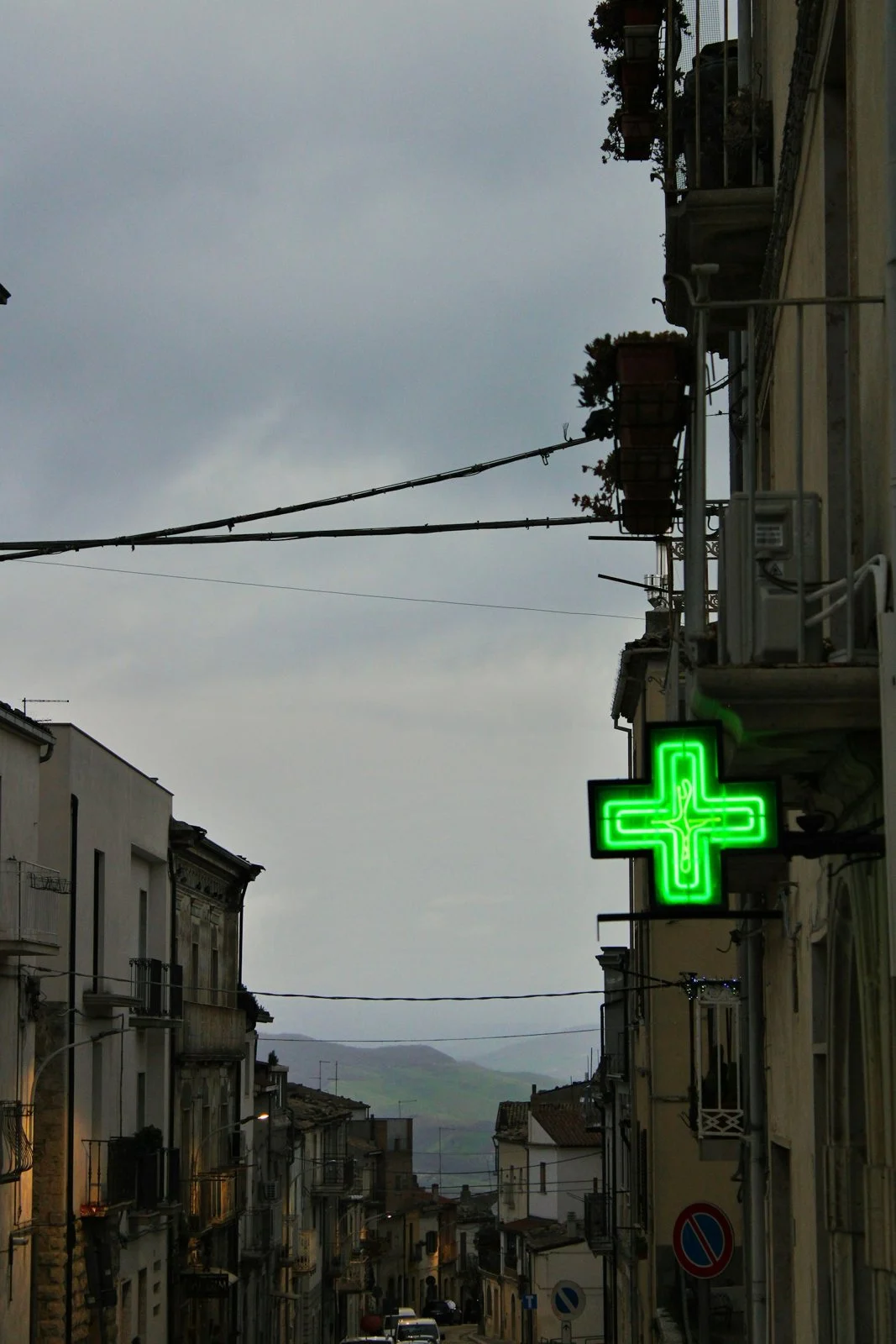
You can spot a pharmacy from a distance: there is a lit green cross over the door, and behind the counter are pharmacists who can choose a product by your child’s age and weight. Many speak at least pharmacy-level English. Without a prescription, a pharmacy sells everything a typical trip needs.
- Children’s paracetamol. The best-known brand is Tachipirina: syrup, drops and suppositories in different strengths for babies, toddlers and older children. No prescription needed, but it is handed over by the pharmacist. Adult 1000 mg paracetamol tablets, on the other hand, are prescription-only in Italy according to pharmacy references; the 500 mg ones are not.
- Children’s ibuprofen — oral suspension and suppositories; the most recognisable brand is Nurofen Febbre e Dolore Bambini.
- Oral rehydration salts for vomiting and diarrhoea — ask for “sali reidratanti”. Buy them on day one if your child’s tummy plays up.
- Mosquito repellent and after-bite products. From spring to autumn Italy has plenty of tiger mosquitoes. Unlike ordinary ones, they bite by day, mostly in the morning and late afternoon, and fly low, so ankles and legs suffer most. Choose a repellent by the minimum age on the pack.
- Sun cream — in pharmacies and any supermarket, including children’s ranges with high SPF.
- Nappies, baby food and nappy cream — in pharmacies and supermarkets, where they are usually cheaper.
The main trap is the strength. The same brand makes children’s medicines in different concentrations. Tachipirina syrup has 120 mg of paracetamol in 5 ml, while the drops have 100 mg in 1 ml, so a millilitre of drops is more than four times as strong as a millilitre of syrup. Children’s Nurofen comes as 100 mg in 5 ml and as 200 mg in 5 ml — twice as strong. So never carry over “how many millilitres we give at home” to an Italian bottle. Compare the strength on the box, tell the pharmacist your child’s age and weight in kilograms, and measure the dose with the device in that same pack, strictly by the leaflet. If in doubt, ask a doctor.
Besides pharmacies, non-prescription medicines are sold in parafarmacie — shops signed “parafarmacia” that also have a pharmacist. They come in handy when the pharmacy is closed for lunch: many Italian pharmacies shut for a couple of hours in the middle of the day, and on Sundays only the duty pharmacies are open.
| What you need to say | In Italian |
|---|---|
| My son / my daughter has a temperature | Mio figlio / mia figlia ha la febbre |
| He (she) is six and weighs 20 kg | Ha sei anni e pesa venti chili |
| Children’s syrup / suppositories | Uno sciroppo / delle supposte per bambini |
| Earache / sore throat / tummy ache | Ha mal d’orecchio / mal di gola / mal di pancia |
| Vomiting, diarrhoea | Vomita, ha la diarrea |
| Rehydration salts | Sali reidratanti |
| Mosquito bites, itching | Punture di zanzara, prurito |
| Sunburn | Scottatura solare |
| Where is the duty pharmacy? | Dov’è la farmacia di turno? |
Pharmacies at night and at weekends: farmacia di turno
Italian pharmacies work on a duty rota: at night, on Sundays and on public holidays at least one farmacia di turno is open in every area. How to find it:
- Go to any pharmacy, even a closed one. The door or window displays a list of the area’s duty pharmacies with addresses and opening hours.
- Check an app or website. There is no single national app, but there are regional ones: in Lombardy, for instance, Federfarma Lombardia’s “Farmacia Aperta”, and in Rome the Order of Pharmacists publishes duty lists. Searching “farmacia di turno” plus the town name also works.
- Ask at hotel reception — they usually know the nearest pharmacy open round the clock.
At night a duty pharmacy often serves through a hatch or on request, with the door locked. For this it may charge a surcharge, the “diritto addizionale”. Under the tariff in force since November 2017 it is EUR 7.50 in town pharmacies, once per receipt rather than per item.
If you need a doctor
- Emergencies — 118 for an ambulance. The single European number 112 now also works in most Italian regions and puts you through to the right service.
- Not an emergency, but you need a doctor at night or at the weekend — the out-of-hours guardia medica. In many regions its number is 116117. In summer, resort areas open a guardia medica turistica specifically for visitors. Non-residents pay; in 2024–2026 different regions charged around EUR 20 for a surgery visit and around EUR 35 for a home visit, depending on the region.
- Insurance. Before any visit to a doctor, call your insurer’s assistance line: they usually direct you to a clinic they work with. EU travellers should carry their EHIC, UK travellers their GHIC. Keep the policy number and phone number on your phone and on paper.
The big cities have children’s hospitals with emergency departments: Bambino Gesù in Rome and Meyer in Florence. If your child is seriously unwell, do not hunt for a paediatrician — call 118.
Once the suitcase is packed and the first-aid kit is sorted, the fun part is left — choosing what to see. We run children’s tours and quests in English in Rome, Florence, Venice and Milan.
Frequently asked questions
What are the essentials to pack for a trip with a child?
Any medicines your child takes regularly, with the prescription and in the original packaging; a children’s fever reducer for the first night; a thermometer; shoes that are already broken in; a sun hat in summer; and a light scarf or cardigan to cover shoulders in churches. Nappies, baby food, sun cream and insect repellent are easy to buy in Italy.
What should go in a children's first-aid kit for travelling abroad?
A fever reducer you have already used at home, a thermometer, plasters, antiseptic, a travel-sickness remedy if your child gets carsick, and anything your doctor has prescribed. Doses only as the leaflet or your paediatrician says. The rest is easier to buy on the spot.
Which children's medicines can you buy in Italy without a prescription?
Children’s paracetamol (the best-known brand is Tachipirina) and ibuprofen as syrup and suppositories, oral rehydration salts, bite creams and sun cream. They are handed over by the pharmacist in a pharmacy, and some are also sold in parafarmacie. Compare the strength on the box: one brand can sell syrups of different concentrations.
Can I bring my own medicines into Italy?
For your own course of treatment, yes: in the original packaging, with a prescription or doctor’s letter, ideally showing the generic name of the active ingredient. Medicines containing narcotic or psychotropic substances need paperwork; within Schengen there is a dedicated certificate valid for up to 30 days. Check your home country’s rules before you leave.
How do I find a pharmacy open at night in Italy?
Every pharmacy door displays a list of the duty pharmacies in the area — farmacie di turno — with addresses and hours. Regional apps and pharmacy association websites help too. At night a pharmacy may serve you through a hatch and add a surcharge per receipt, which under the 2017 tariff is EUR 7.50.
Do I need a scarf to enter churches in Italy?
Yes. The major churches — in the Vatican, Florence and Venice — check that shoulders and knees are covered, and that applies to children too. A light scarf or cardigan in your day bag solves it, and shorts are best knee-length.
Does a child need a car seat in an Italian taxi?
Not by law: in a taxi a child under 150 cm may travel without a seat if they sit in the back with a passenger aged 16 or over. In a hire car a child seat is compulsory, and for children under four, so is an alarm device that stops a child being left in the car.