Contents 9
- “Thumbs down means death”
- “Those who are about to die salute you”
- “Every fight was to the death”
- “Gladiators were slaves sent to die”
- “Gladiators fought lions”
- “Only men fought in the arena”
- “Gladiators ate meat and were bodybuilders”
- How to tell gladiators apart
- Where to see it for yourself in Rome
“Thumbs down means death”
The poet Juvenal writes that the crowd condemns a fighter “with a turned thumb” — pollice verso. Turned which way, he does not say, nor does anyone else, and not a single ancient image of the gesture survives.
Thumbs down was the invention of the French painter Jean-Léon Gérôme, whose 1872 canvas is titled “Pollice Verso”. The producers showed that same painting to Ridley Scott to talk him into making “Gladiator”, and the gesture became “history”. Some scholars think death was demanded with the thumb sticking out and mercy with the thumb pressed into a fist. What we do know: the crowd asked for mercy by waving cloths and shouting, and the decision belonged not to the winner but to the man paying for the games, or the emperor.
“Those who are about to die salute you”
The phrase is real, but it was said once. Suetonius tells how in AD 52 the emperor Claudius staged a naval battle on the Fucine Lake. The fighters — some 19,000 condemned men, not gladiators — shouted: “Hail, emperor, those who are about to die salute you!” Claudius answered something like “or not”; they took it as a pardon and refused to fight. He had to drive them into battle with threats and promises.
A detail for children: this happened 28 years before the Colosseum opened. There is no other evidence that anyone greeted the emperor this way in the arena.
“Every fight was to the death”
A gladiator was expensive: someone bought him, fed him, trained him for years and paid for his doctors. Killing one every time would have been ruinous, and Augustus banned fights with no chance of mercy altogether. Each bout had a referee with a long staff — the summa rudis — who separated the fighters and stopped the fight.
The best evidence is the tombstone of Flamma, a secutor from Syria. He lived to 30 and fought 34 times: 21 wins, 9 draws and 4 defeats after which he was spared. Historians estimate that in the 1st century AD a defeated gladiator died in roughly one fight in five, later one in four. Death in the arena happened, but it was not the rule.
“Gladiators were slaves sent to die”
There were slaves and prisoners among them. But there were volunteers too — auctorati, free men who signed up for money and fame. They swore an oath, quoted by Petronius, to accept being burned, chained, beaten and killed by the sword. By some estimates, by the end of the Republic volunteers made up as many as half of all gladiators.
“Gladiators fought lions”
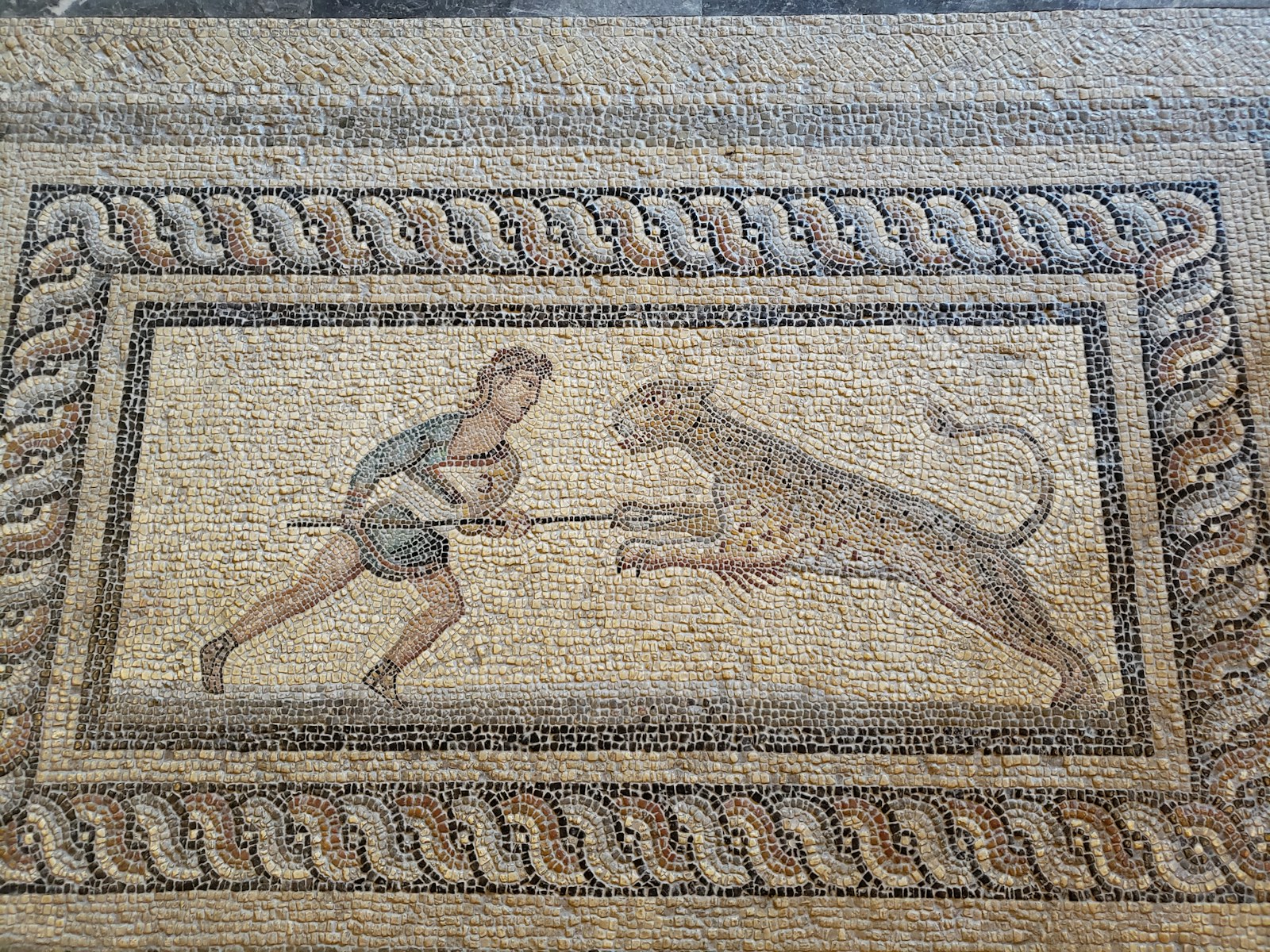
Hardly ever. Animals were fought by venatores — hunters with a school of their own, the Ludus Matutinus, the “morning school”. The name gives it away: the hunts were held in the morning, while gladiators came on in the afternoon and fought each other.
“Only men fought in the arena”
The British Museum holds a marble relief from Halicarnassus, today’s Bodrum. It shows two women in gladiator kit, without helmets, labelled with their arena names, Amazon and Achillia. Above them is a single Greek word: “released”. Both were let go alive; scholars argue whether they were released from the fight after a draw or from service altogether. Around AD 200 Septimius Severus banned women from fighting — so there was something to ban.
“Gladiators ate meat and were bodybuilders”
Romans called them hordearii, “barley men”. In 1993 a gladiator cemetery of the 2nd and 3rd centuries was found at Ephesus, and anthropologists from Vienna studied the bones. They ate mostly grain and beans, with little meat — much like ordinary townspeople. But their bones were high in strontium: gladiators drank a tonic made from plant ash to make bones stronger and help them heal. Pliny the Elder mentions it too.
Many skeletons also show healed fractures: expensive fighters had good doctors. And some skulls have three holes in a row — the mark of a trident.
How to tell gladiators apart
Gladiators came in types, and pairs were matched so that one fighter’s strength balanced the other’s weakness. The four main ones:
| Type | How to spot him | Usual opponent |
|---|---|---|
| Murmillo | large rectangular shield, helmet with a broad brim and crest; the name comes from the Greek for “fish” | the Thracian |
| Thracian | small shield, short curved sword, a griffin on the helmet crest | the murmillo |
| Retiarius | net, trident and dagger, no helmet, a guard on the left shoulder | the secutor |
| Secutor | smooth rounded helmet with two eye holes — nothing for the net to catch on | the retiarius |
A game for the spot: the child finds a fighter on a mosaic and uses the table to work out who he is and whom he is about to fight.
Gladiator school in Rome for children
Two hours with historical re-enactors: children put on a tunic, look at weapons and armour, learn sword skills from a professional gladiator and finish with a final duel. Everyone leaves with a young gladiator’s certificate.
EUR 150 for one child · two children EUR 200, three to five EUR 250 · 2 hours · ages 6–15 · a shared class with other children; easiest to reach by taxi
Where to see it for yourself in Rome
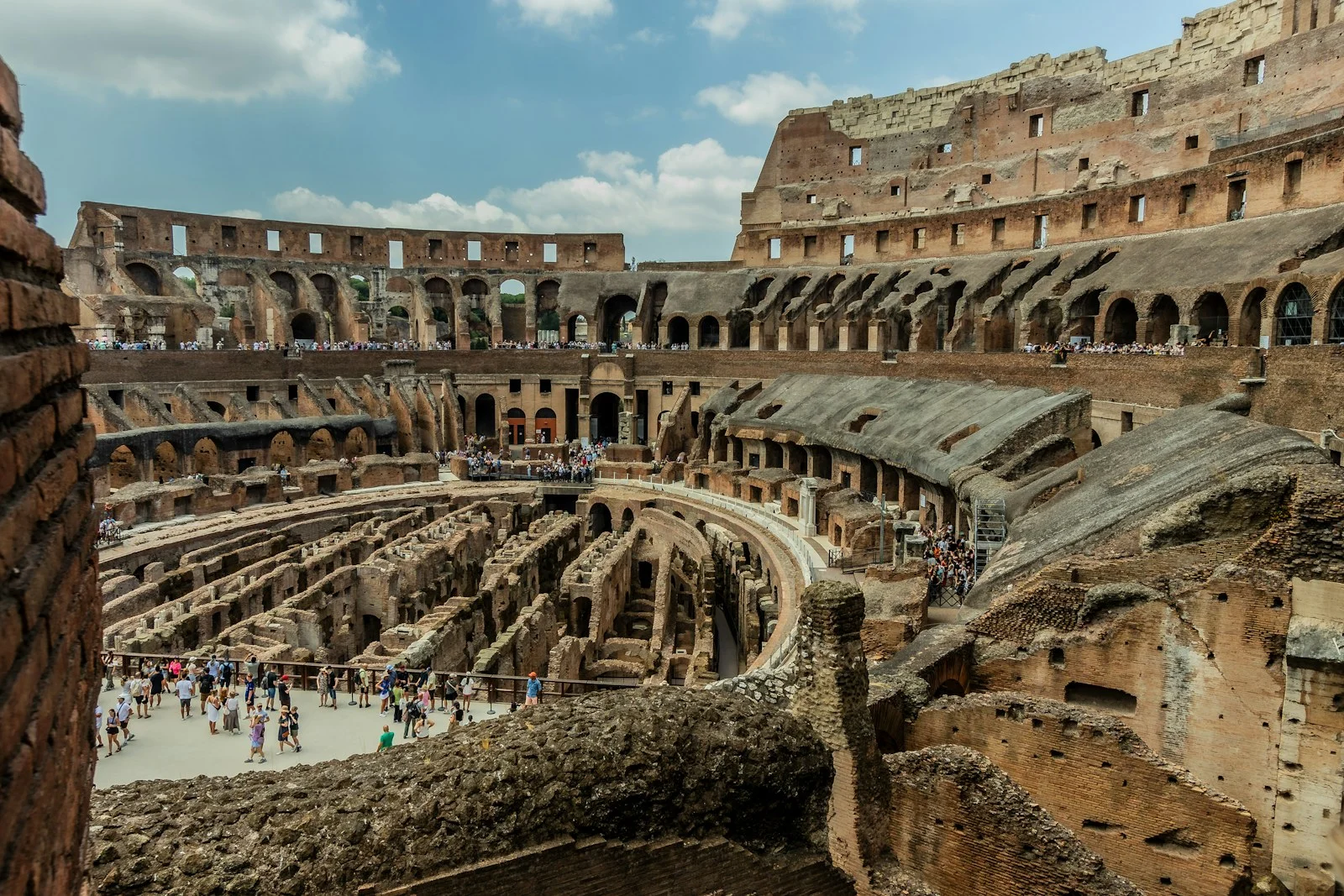
The Colosseum underground. The maze of brick corridors under the arena can be seen from above with any ticket. Under the Flavians there were 28 lifts here for animal cages, and raising them all at once took 224 people. You can only go down with the Full Experience underground ticket at EUR 24 — and it is the first to sell out; why, we explain in do you need to book the Colosseum in advance.
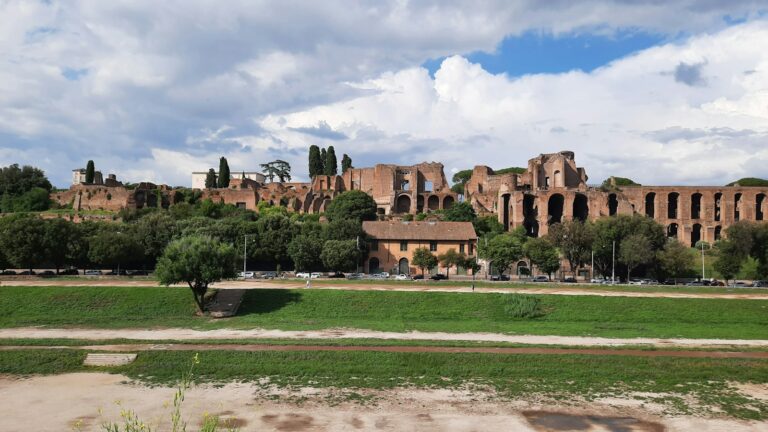
The Ludus Magnus, the gladiator school. A couple of minutes from the Colosseum, between Via Labicana and Via di San Giovanni in Laterano. The northern half survives: part of the oval training arena, whose stands held about 3,000 spectators, and the small rooms around it. An underground passage led from here straight into the Colosseum’s basement. It has been closed for restoration since August 2024, but the school lies below street level, and from the pavement you can see all of it, for free.
The mosaic in the Galleria Borghese. It was found in 1834 in a Roman villa on the Via Casilina and set into the floor of the gallery’s very first hall. There are retiarii, secutores, venatores with panthers — and their names. Next to the name of the retiarius Aurius is the Greek letter Θ, the mark of the dead, from “thanatos”, death. It dates from the 3rd–4th century, and it is an honest reminder that death in the arena did happen. Gallery tickets are sold by timed session — we explain how to get them separately.
Colosseum quest for children: “The Emperor’s Curse”
Two and a half hours in which the child acts rather than listens: maps, riddles, tasks. We work out what gladiators really looked like and how the fights went, go inside the Colosseum and round the outside, and see the Arch of Constantine.
EUR 250 per group of up to 5 · each additional person +EUR 20 · 2.5 hours · ages 6+ · Colosseum entry tickets not included
Which Colosseum ticket you need for the underground and how to buy it is covered in Colosseum tickets: how to buy and what is included.
Frequently asked questions
Did gladiators always fight to the death?
No. A bout was usually fought to a win, not to the death: the loser was often spared, and Augustus even banned fights with no chance of mercy. Historians estimate that in the 1st century AD a defeated gladiator died in roughly one case in five.
What did thumbs down mean in ancient Rome?
Nobody knows. Ancient writers only say “with a turned thumb” (pollice verso), never which way. The thumbs-down gesture was popularised by Jean-Léon Gérôme’s 1872 painting.
Did gladiators really say “Those who are about to die salute you”?
The phrase is recorded once: in AD 52 condemned men shouted it to the emperor Claudius before a staged naval battle on the Fucine Lake. There is no evidence it was a routine gladiators’ salute.
Were there female gladiators?
Yes, but rarely. The British Museum holds a relief from Halicarnassus showing two women fighters, Amazon and Achillia. Around AD 200 the emperor Septimius Severus banned women from fighting in the arena.
What did gladiators eat?
Mostly barley and beans, with little meat — Romans called them “barley men”. Analysis of bones from a gladiator cemetery at Ephesus confirmed this and showed they drank a plant-ash tonic to strengthen their bones.
Where in Rome can you see where gladiators trained?
The Ludus Magnus, the main gladiator school, lies a couple of minutes from the Colosseum, between Via Labicana and Via di San Giovanni in Laterano. It is closed for restoration, but you can see the whole of it from the pavement above, for free.
Did gladiators fight lions?
Hardly ever. Animals were fought by venatores, a separate profession with its own school, the Ludus Matutinus. The hunts were held in the morning and the gladiator fights in the afternoon.