Contents 6
Why it tilted
The culprit is not the architecture but the ground. Pisa stands on a former marsh: sand, clay and water. The tower’s foundation was laid only about three metres deep — not enough for a building of 57 metres.
Under the southern side lay soft wet clay, under the northern side firmer ground. The soft side began to settle and the tower behaved like a stick pushed into wet sand: it leaned.
It was noticed early, at the third storey. And the construction was simply stopped. For almost a hundred years, because of wars. That pause is what saved the tower: over a century the ground compacted and settled. Had the work continued without a break, the tower would have collapsed unfinished.
Why it stands even though it is crooked
Here is simple physics you can show a child on the spot with a book or some blocks.
As long as a line dropped from the centre of gravity lands inside the base, the object stands. Tilt a stack of books — it holds. Tilt it a little more, the line goes past the edge of the support, and the stack falls. For the tower that line still passes inside the foundation.
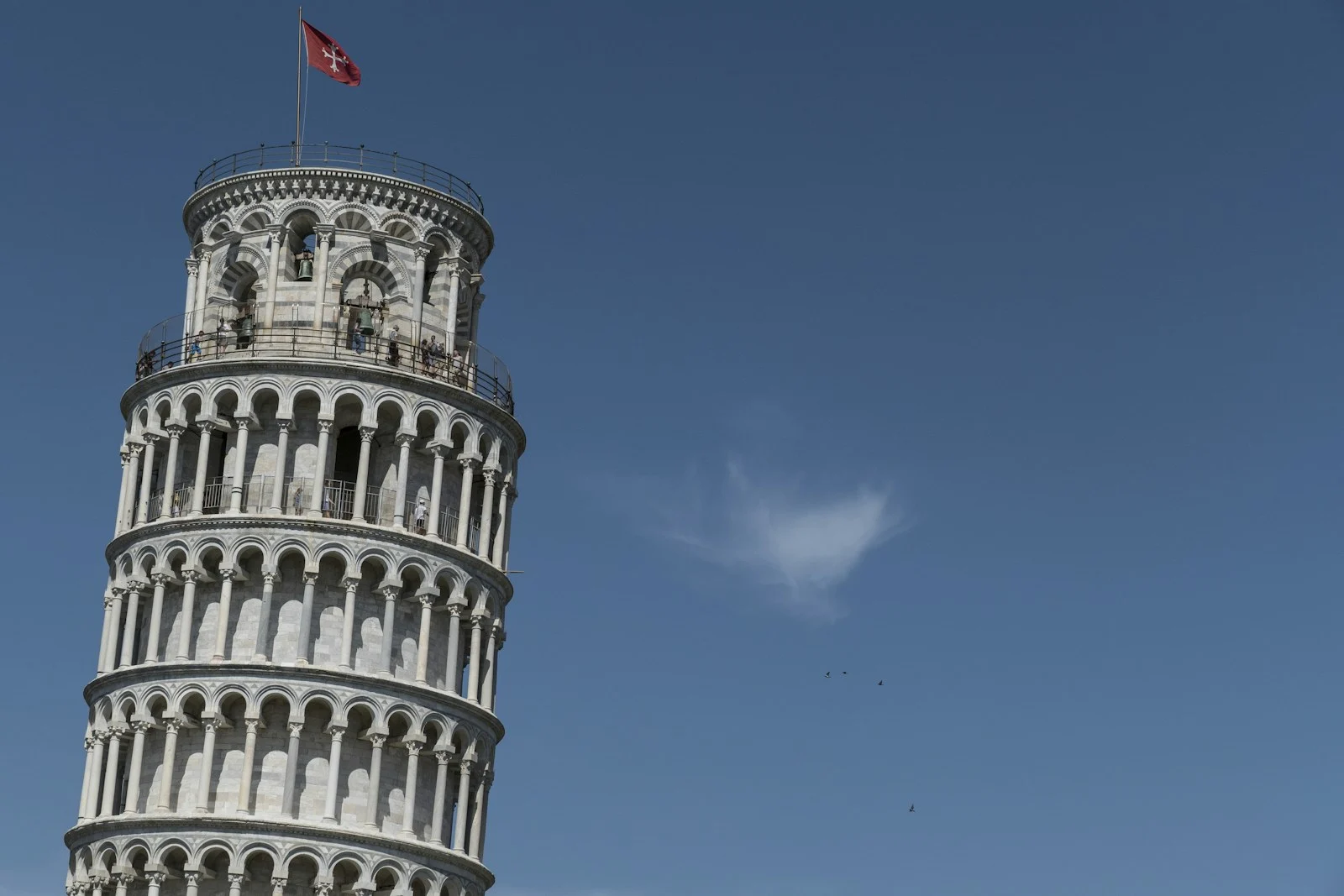
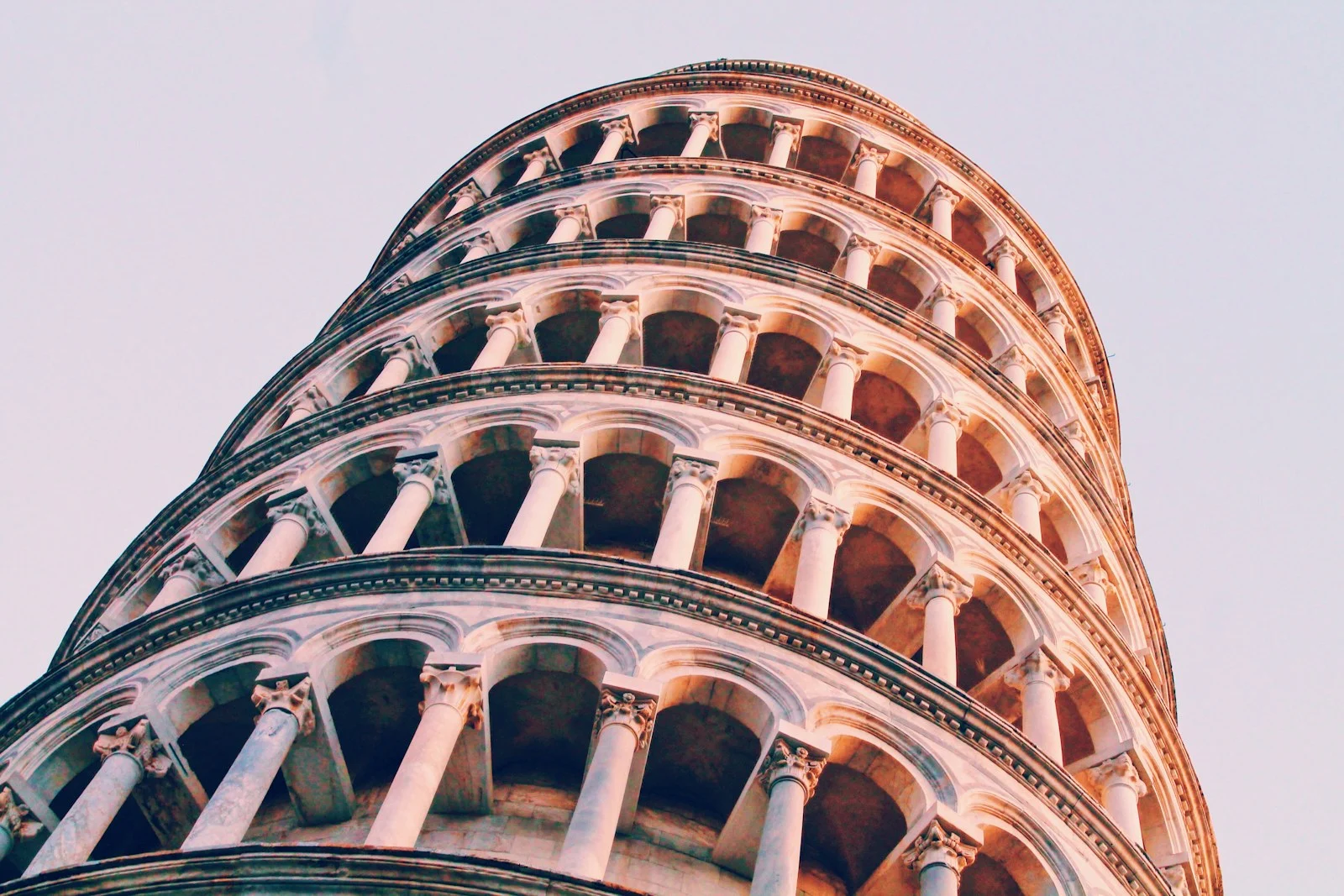
And a second thing almost nobody notices: the tower is not straight but slightly curved, like a banana. Builders of later generations saw the lean and set each new storey with a small offset the other way, trying to correct it. The result is an arc — and the centre of gravity moved back towards the middle.
How it was saved over eleven years
By the end of the 20th century the lean had become dangerous: the tower was tilting about a millimetre a year, and in 1990 it was closed to visitors.
The first attempt was a counterweight: hundreds of tonnes of lead blocks were laid on the northern side. It helped, but not much, and it looked terrible.
What worked was another solution, and an elegant one: soil was removed little by little from under the raised northern side with thin drills. The earth beneath it settled and the tower slowly sank back — it was not pushed, the ground it stood on was lowered.
The work ran from 1990 to 2001. The tower was straightened by nearly 38 centimetres and reopened. The lean is now about 3.97 degrees, and sensors show it is not growing: in the years since, the tower has straightened by a few more centimetres on its own. Engineers speak of stability for at least two hundred years.
Should you climb it with a child
Here is the important rule that disappoints families on the spot: children under eight are not allowed up at all. From 8 to 18 only holding an adult’s hand. It is a condition of entry, not a recommendation, and the ticket is not refunded because of it.
If your child is eight or over, decide for yourself:
- Nearly 300 steps up a spiral staircase inside the wall.
- The steps are worn smooth and slightly hollowed.
- You feel the lean as you climb: on one side of the stair you are pulled forward, on the other backwards. It is a strange sensation and it frightens small children.
- At the top there is an open platform with a low railing.
A ticket to climb costs EUR 20, entry is timed and in groups. From below the tower is honestly no less impressive — and the “holding up the tower” photograph only works from there.
What else to tell them on the spot
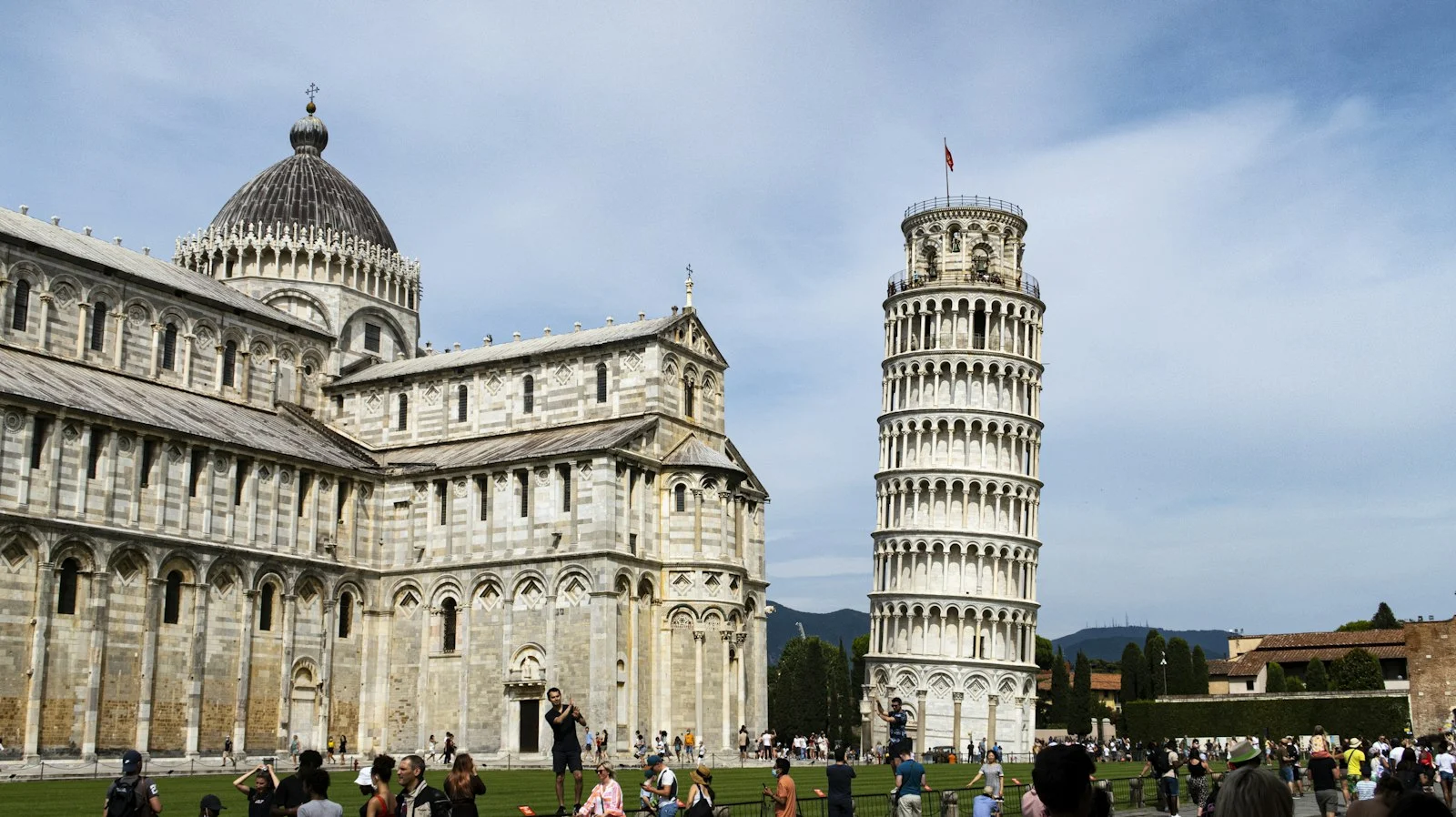
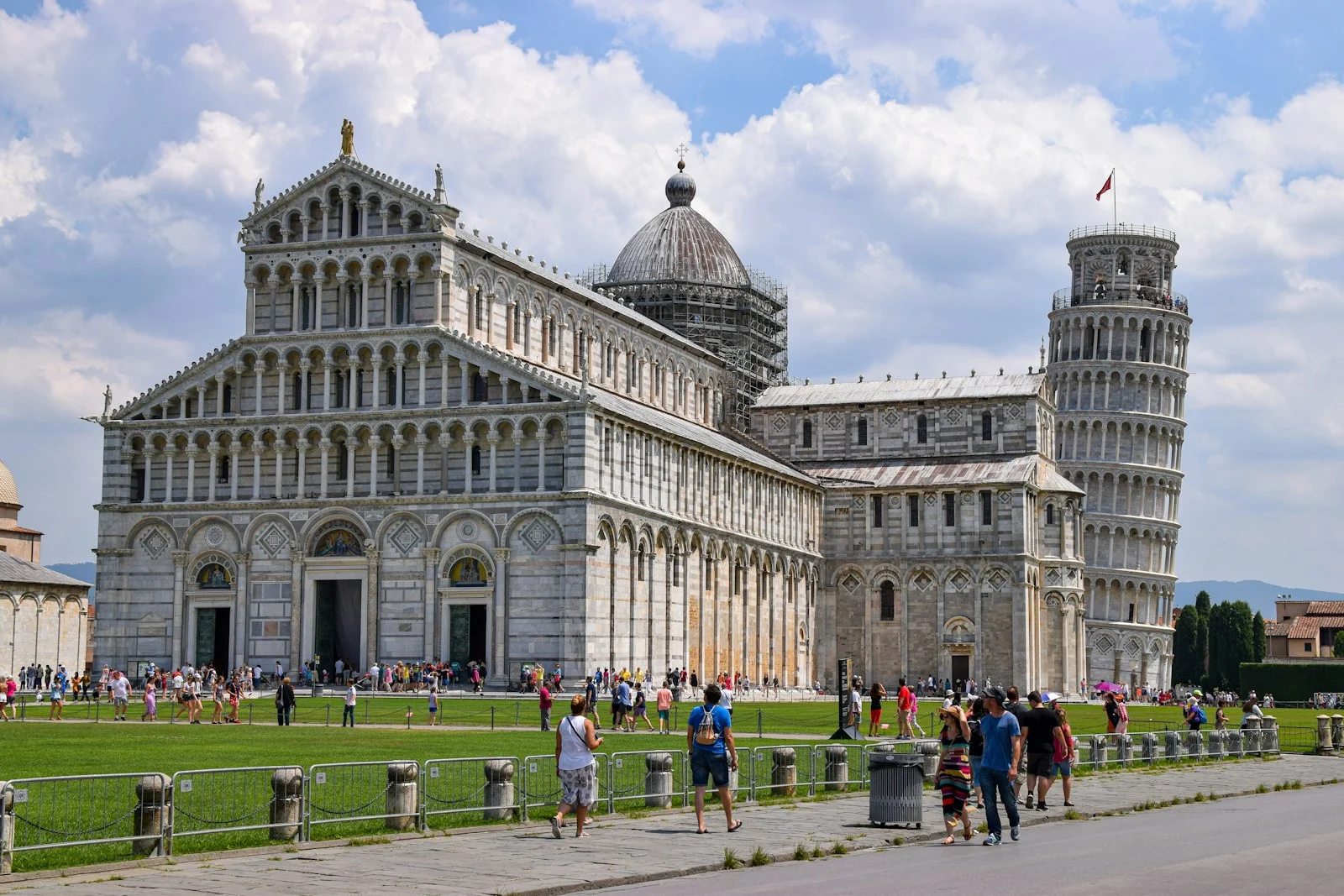
- The tower is a bell tower. A free-standing campanile of the cathedral, not a building in its own right. Next to it are the cathedral and the round baptistery, and they lean slightly too — same ground.
- It took almost 200 years to build, from 1173 to 1372, in three stages. Look closely and the storeys differ slightly in stone.
- The bells at the top are real, seven of them, each with its own name.
- The story of Galileo dropping balls of different weights from the tower comes from his pupil Viviani; Galileo himself never described such an experiment, so it is most likely a legend. But nobody stops you testing the idea on the stairs.
Practicalities: getting there
Pisa is an hour by train from Florence and about three hours from Rome. The Piazza dei Miracoli, where the tower stands, is a twenty-minute walk from the station. Half a day is plenty, and it is a handy way to break up Florentine museums with something children like straight away.
How Italian trains work and why a family should buy tickets in advance is in a separate guide: trains in Italy: how to buy a ticket without overpaying.
Frequently asked questions
Why did the Leaning Tower of Pisa tilt
Because of the ground. Soft clay with water lay under the southern side and firmer ground under the northern one. A foundation only three metres deep began to settle unevenly at the third storey, while the tower was still being built.
Why does the Leaning Tower not fall
As long as the vertical line from its centre of gravity lands inside the base, the tower stands. Builders of later centuries sensed this and set the upper storeys with a curve the other way — the tower is slightly banana-shaped, and that holds it.
How far does the Tower of Pisa lean
About 3.97 degrees from vertical. It used to be more: the works of 1990–2001 straightened it by nearly 38 centimetres, and it has been straightening a little further on its own since.
How many steps are in the Leaning Tower
Nearly 300 steps up a narrow spiral staircase inside the wall. Climbing it you feel the lean: on one side you seem to be pulled forward, on the other backwards.
From what age can children climb the tower
Children under eight are not allowed up at all; from 8 to 18 only holding an adult’s hand. It is a rule, not a recommendation: you cannot get a refund because of a child’s age.
Will the Leaning Tower fall
Not in the coming centuries. After the 1990–2001 works engineers consider it stable for at least 200 years, and sensors show the lean is not growing but slowly decreasing.