This piece is put together from dozens of such conversations.
Nothing invented. Just what guides talk about most often.
On plans that know how to bend
A guide recently told us something simple:
“The best family days start with a plan and end by departing from it.”
The route was worked out: distance, pace, stopping points.
Forty minutes in it was clear that today was not the day.
No argument. No meltdown. Worse — tiredness that has not yet found words.
The plan said: on to the museum.
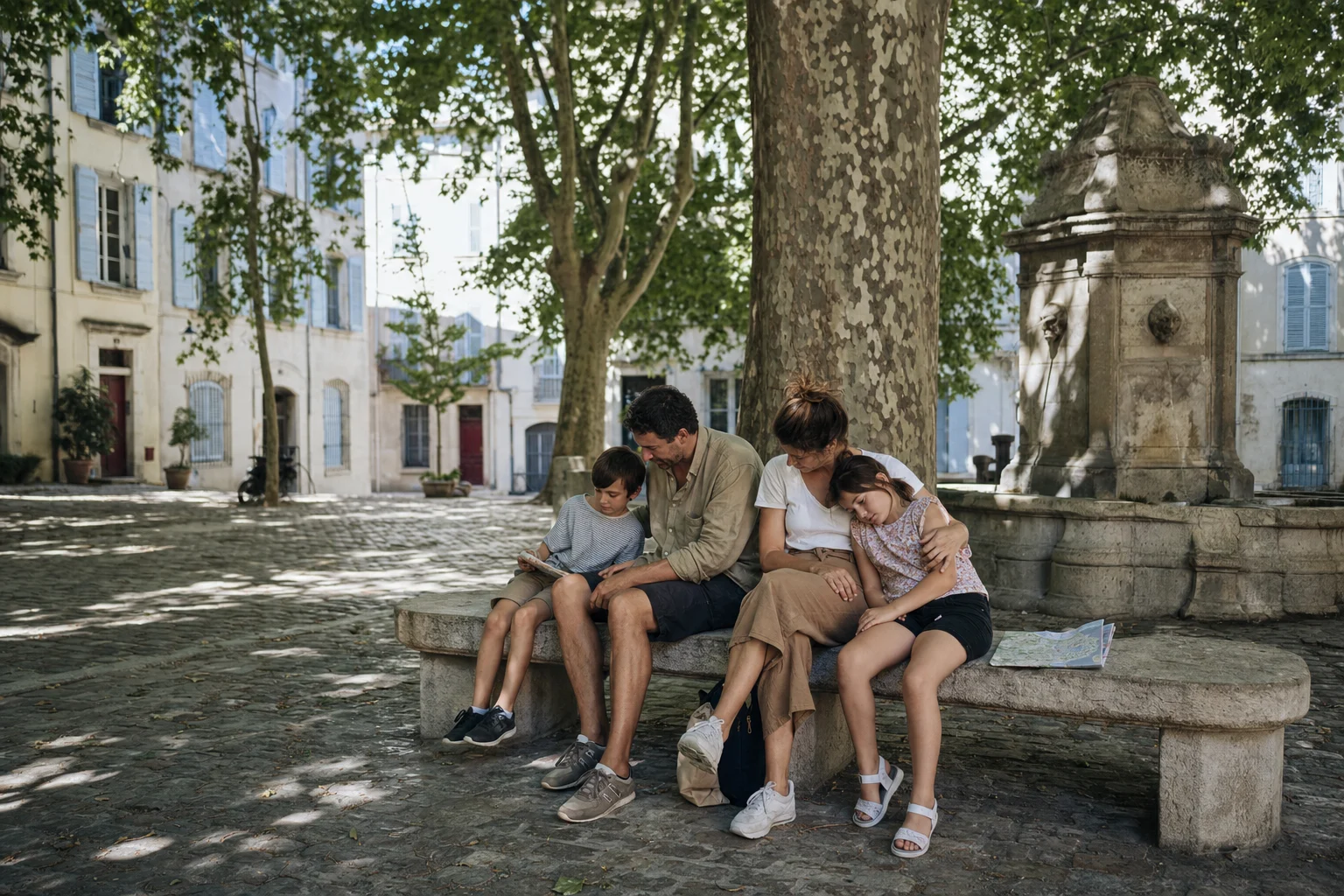
Reality said: shade, a bench, a pause.
The guide did not try to “get the route back”.
They sat down. Stayed quiet. Waited.
Ten minutes later the children came back to life.
Fifteen minutes later the parents stopped apologising to each other for being tired.
The route had not gone anywhere. It simply waited.
On knowledge that does not work without meaning
Another frequent observation from guides:
children do not resist information — they resist pointlessness.
When adults say “this is important”, children start looking around.
When adults share a personal story, children listen.
One guide described changing format halfway through a tour:
no dates, no terms, just one story — how he once got lost in this city himself.
That was enough.
The questions came back. So did the contact.
On tiredness that is best not treated with heroism
On a family walk somebody always tires first.
And it is almost never the person who planned the route.
Guides often say:
ignore the tiredness and there will be a row.
Acknowledge it and the day can be saved.
Sometimes the most professional decision is to explain nothing.
Just stop.
The story we hear more than any other
One family very much wanted to “see the maximum”.
They honestly tried.
A couple of hours in, the youngest said the line the guide retold afterwards with a smile:
“I don’t like being a tourist.”
They turned off.
Found a courtyard.
Spent almost an hour there.
It turned out to be the one day of the trip the parents later remembered without tension.
What we at Kidster took from this
Family journeys are rarely perfect.
And almost never linear.
But if a family leaves a walk calmer than it arrived,
if in the evening there is still energy to laugh at what went off plan,
then it worked.
We do not assemble perfect routes.
We assemble experiences in which a family is allowed to be alive.