Contents 6
Ticket and opening hours
- Full ticket — EUR 18, the price in force since 1 July 2026.
- Reduced — EUR 2.
- Children and teenagers under 18 — free.
Until the end of 2026 the same ticket also admits you to two house museums — Hendrik Christian Andersen and Boncompagni Ludovisi. A small bonus few people know about.
There can be a queue, but nothing like the Colosseum: half an hour at peak, usually less.
Four buildings in one
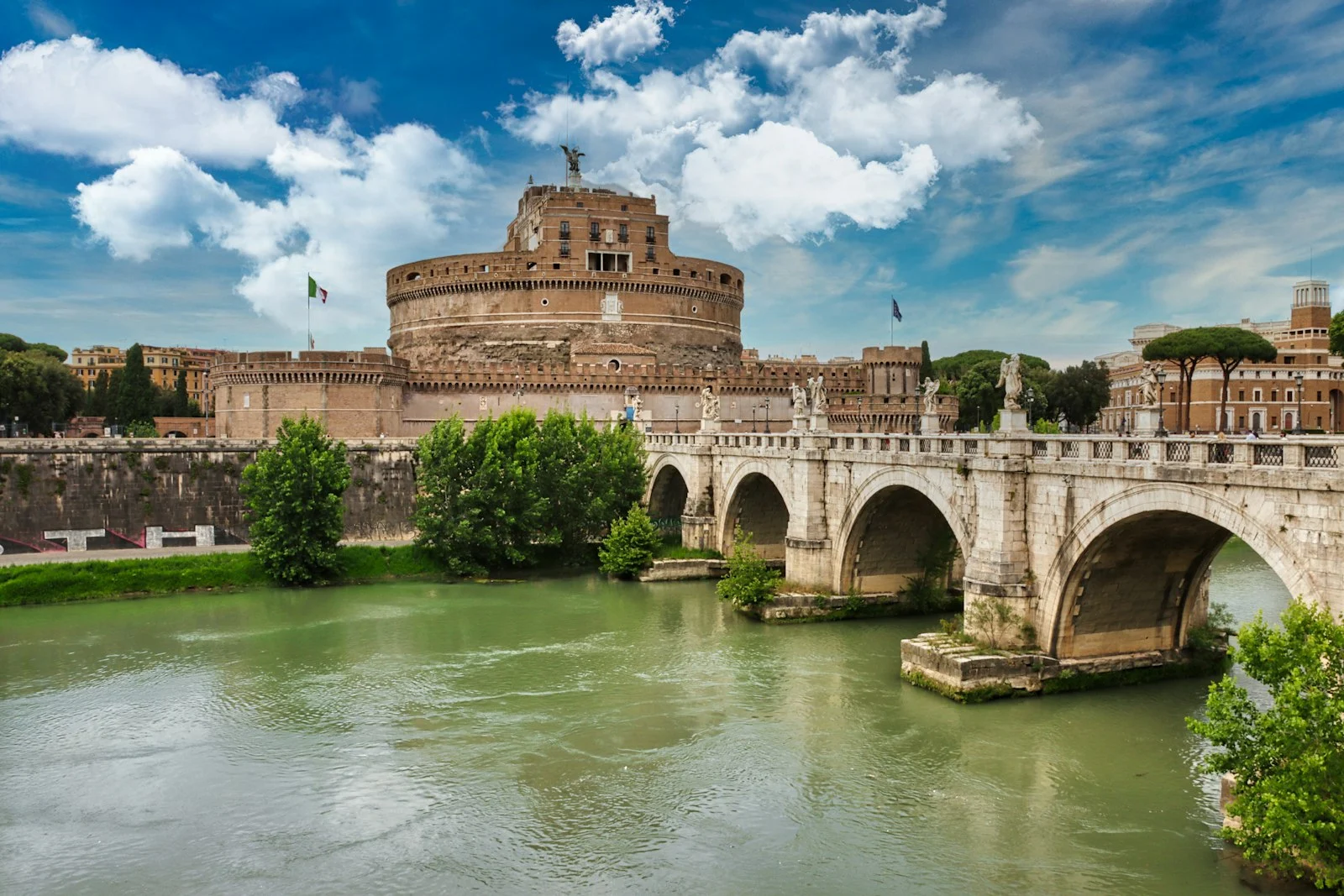
This is the easiest way to explain the castle to a child — it changed four times.
- 139 AD: a tomb. The emperor Hadrian built himself a round mausoleum. Inside, the gentle spiral ramp along which the urn of ashes was carried still survives — and it is the one you walk up.
- 5th century: a fortress. The mausoleum was built into the city wall and became a gate of Rome. The marble facing was stripped off and, according to legend, statues were thrown down on the besiegers.
- 14th century: a papal refuge. A covered corridor was run from the Vatican to the castle, and the fortress became the last shelter.
- Later: a prison. Giordano Bruno was held in the cells, as was Benvenuto Cellini, who by his own account escaped from here.
The Passetto: a corridor to the Vatican
This is the detail worth bringing a child here for. The Passetto di Borgo is a covered corridor some eight hundred metres long, running along the top of a wall from the Vatican straight into the castle.
It was genuinely used. In 1527, when the emperor’s troops sacked Rome, Pope Clement VII escaped along this corridor while the Swiss Guard died in the square covering his retreat. Of one hundred and eighty-nine guards, forty-two survived.
The corridor itself is not always open: access depends on the season, on works and on the tour timetable. But you can see it from outside in any case — it is the wall running from the castle towards the basilica.
The route inside: bottom to top
- The spiral ramp — ancient, winding around the central core. The slope is gentle and a child walks it easily.
- The hall of urns — what the building was built for: the place where the urn with Hadrian’s ashes stood.
- The Courtyard of the Angel — an open space with a marble angel and stacked stone cannonballs. The balls can be touched.
- The papal apartments — painted rooms, unexpectedly ornate after the fortress walls.
- The rooftop terrace — a view over all Rome and down onto the bridge with its statues. It is the end of the route and the best part.
Allow an hour and a half. The route runs one way, and turning back halfway is awkward.
What works with children
- The cannons and cannonballs in the courtyard — there are many and they are real.
- Hunting for arrow slits and looking through them: which side the enemy was expected from.
- The story of Cellini’s escape — he climbed down on bedsheets, broke his leg and got away anyway.
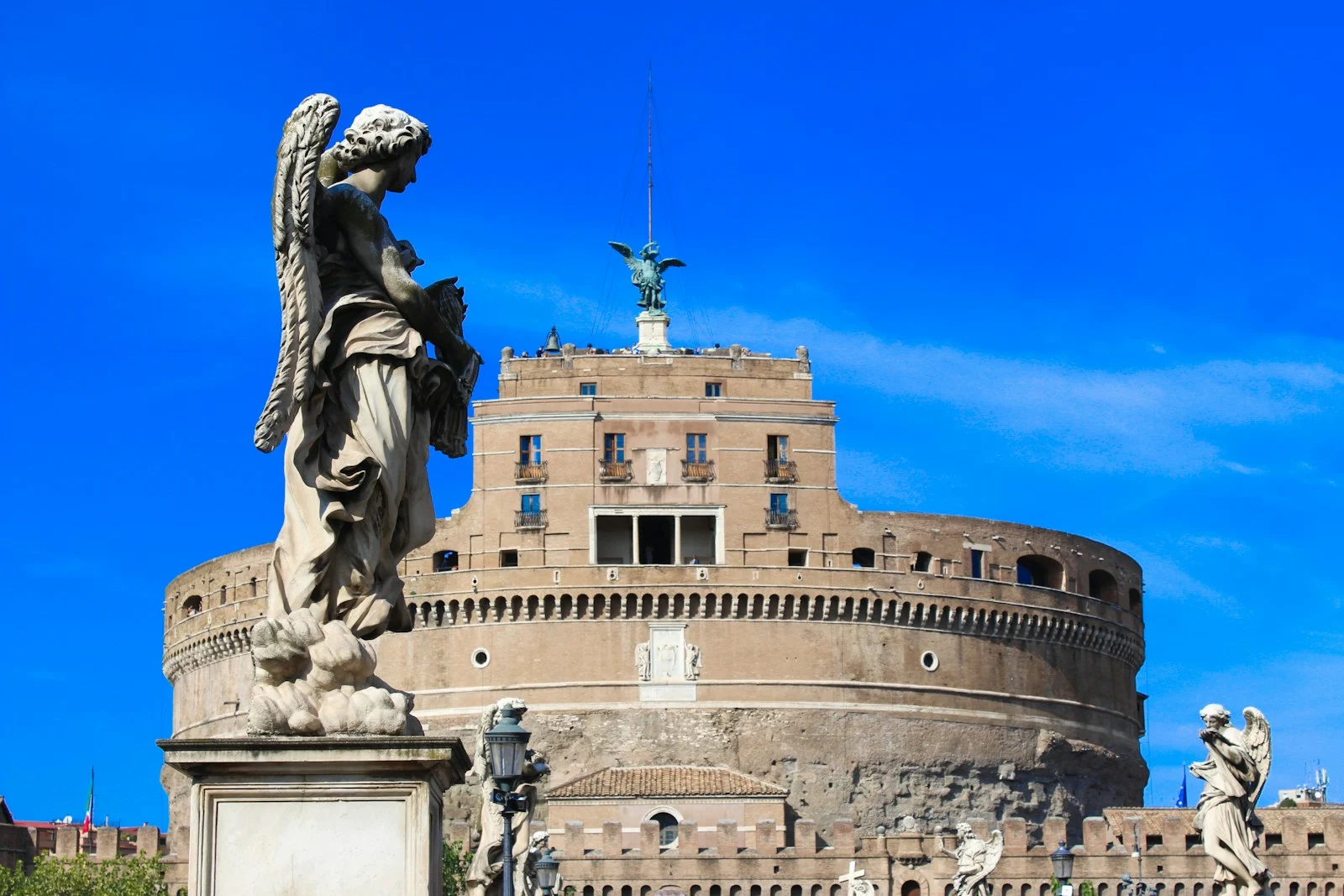
- Finding the angel — first the marble one in the courtyard, then the bronze one right at the top.
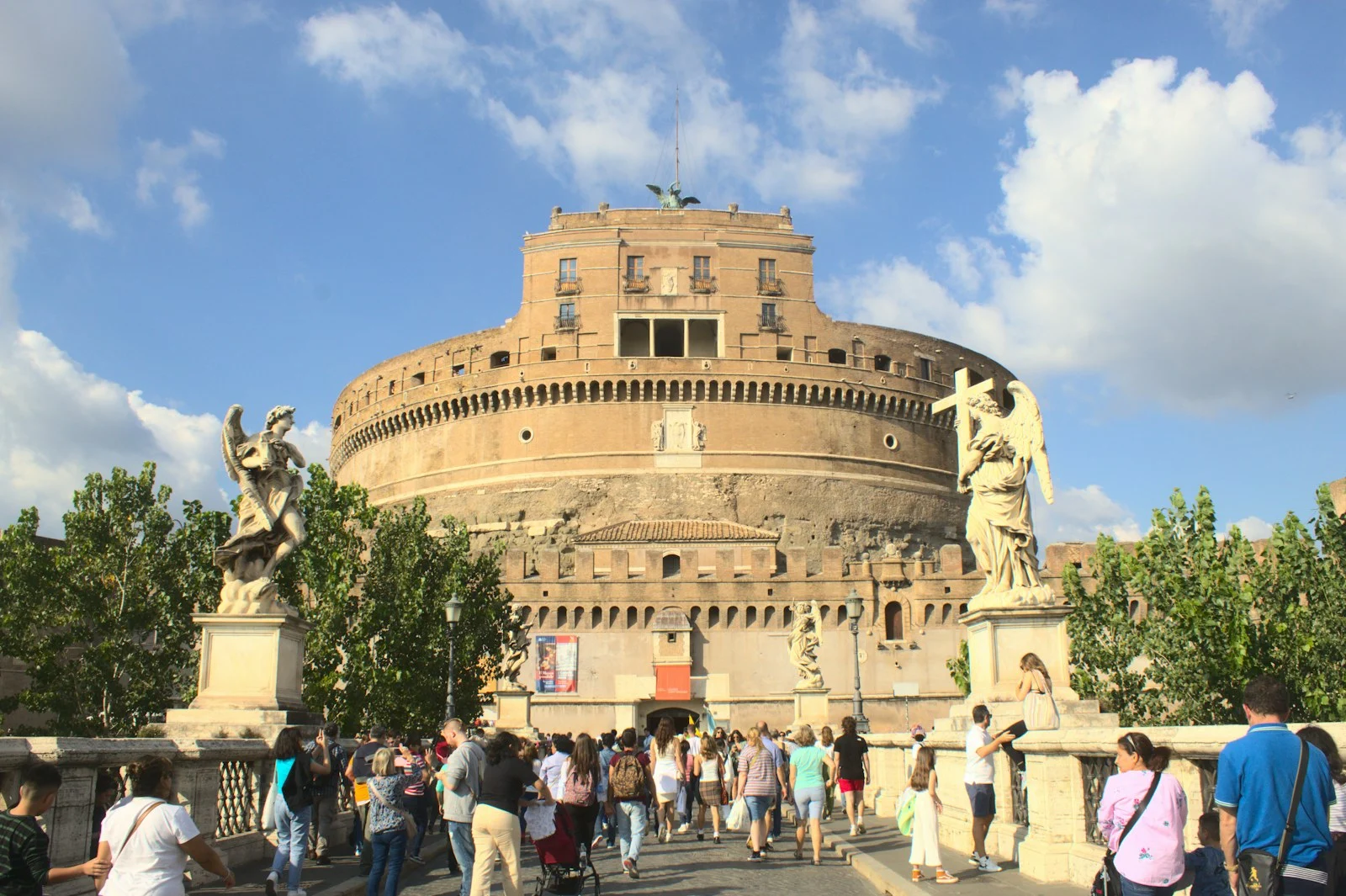
- Ponte Sant’Angelo in front of the entrance: ten angel statues from Bernini’s workshop, each holding a different object. A ready-made task: find the one with the cross, the one with the nails, and so on.
What is nearby
It is a ten-minute walk from the castle to St Peter’s Basilica — a natural pairing for one day. How to get into the basilica and why people are turned away at the door is covered separately: St Peter’s Basilica, the dome and the dress code.
We run quest tours for children in Rome — all the routes are on our Rome page.
Frequently asked questions
How much is a ticket to Castel Sant'Angelo
EUR 18 for adults since 1 July 2026, EUR 2 reduced. Children and teenagers under 18 enter free.
What is the Passetto di Borgo
A secret corridor some 800 metres long connecting the castle with the Vatican. Popes used it to leave the palace under siege. It is not always open — access depends on the season and on works.
How long do you need for the castle
An hour and a half including the climb to the roof. The route spirals from bottom to top, and turning back halfway is awkward.
Why is it called the Castle of the Holy Angel
According to legend, in 590 the archangel Michael appeared above the mausoleum sheathing his sword — a sign that the plague was over. The bronze angel on the roof stands on that spot.
Is there a lift in Castel Sant'Angelo
Partly. The main route is the gentle spiral ramp and stairs, and it is hard going with a pushchair. A child who walks manages the climb easily.