Contents 5
Where the ban came from
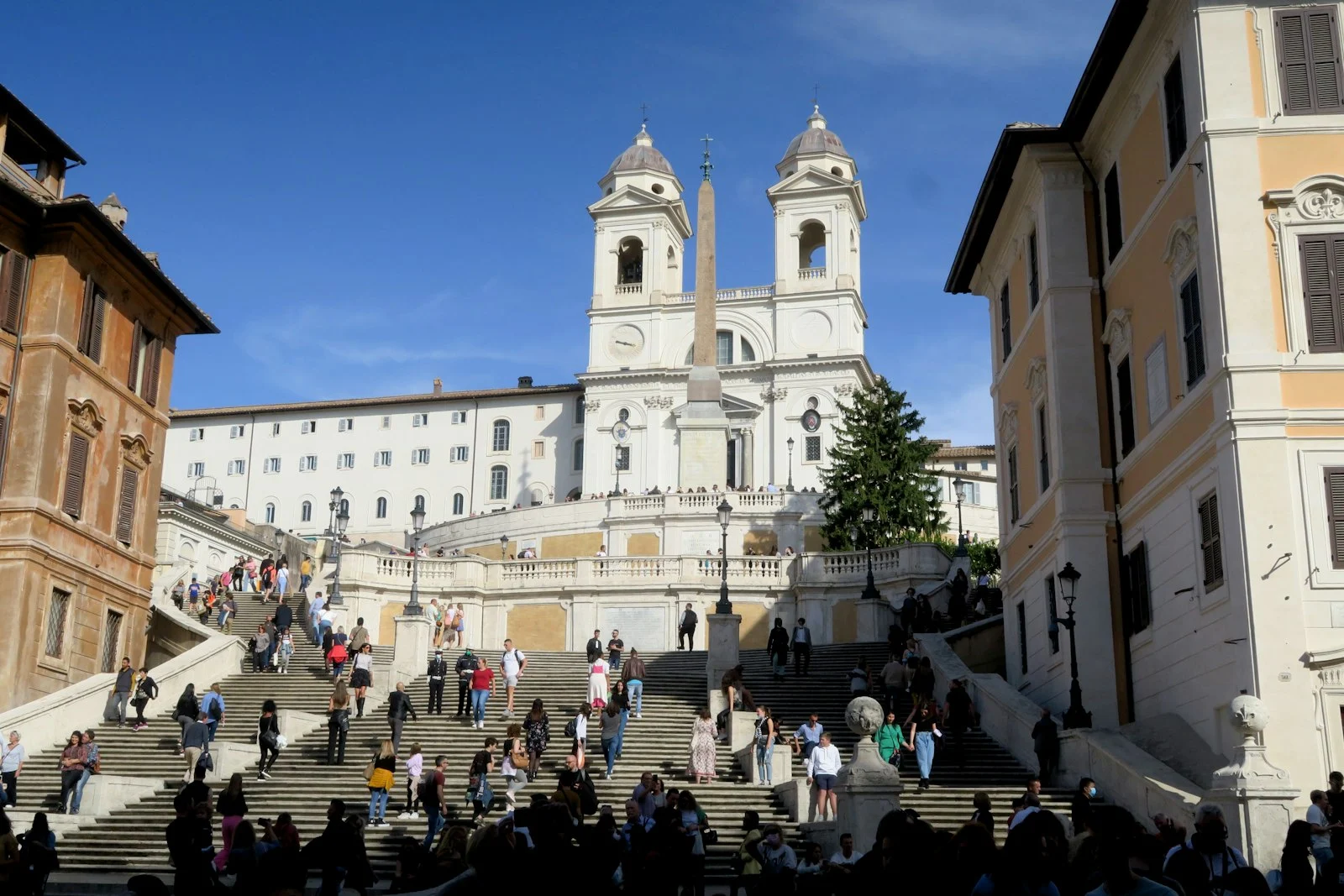
The staircase is a monument of 1723–1725, and its steps are travertine, which wears down and soaks up whatever is spilt on it. While dozens sat there it went unnoticed. When thousands began sitting at once — with coffee, gelato and bottles — the city brought in a regulation.
Police officers are on duty on the steps now: they come over and ask you to stand up. It happens calmly and without argument, but it happens constantly. Fines exist for damaging the monument — stains, scratches, littering — and there the sums run into hundreds of euros.
What this means for a family: a child who has walked three kilometres will sit down on the first step automatically. Know it in advance and do not plan the steps as a place to rest.
Where to sit instead
- The rim of the Barcaccia fountain right at the foot of the steps — this one is allowed.
- Piazza Navona — ten minutes on foot, with benches and fountain rims.
- Piazza del Popolo and the Pincio terrace above it — fifteen minutes, and the best sunset in this part of town.
- Villa Borghese — if you need a proper rest rather than a pause.
The fountain below: why it looks like a boat
The Barcaccia — “the old boat” — is shaped like a half-sunken barge, and there is a practical reason for it. The water comes here along the Aqua Virgo aqueduct, and the pressure at this point is weak: no tall jet is possible. The sculptor turned the flaw into the design — if the water cannot rise, let it spill over the sides of a sinking boat.
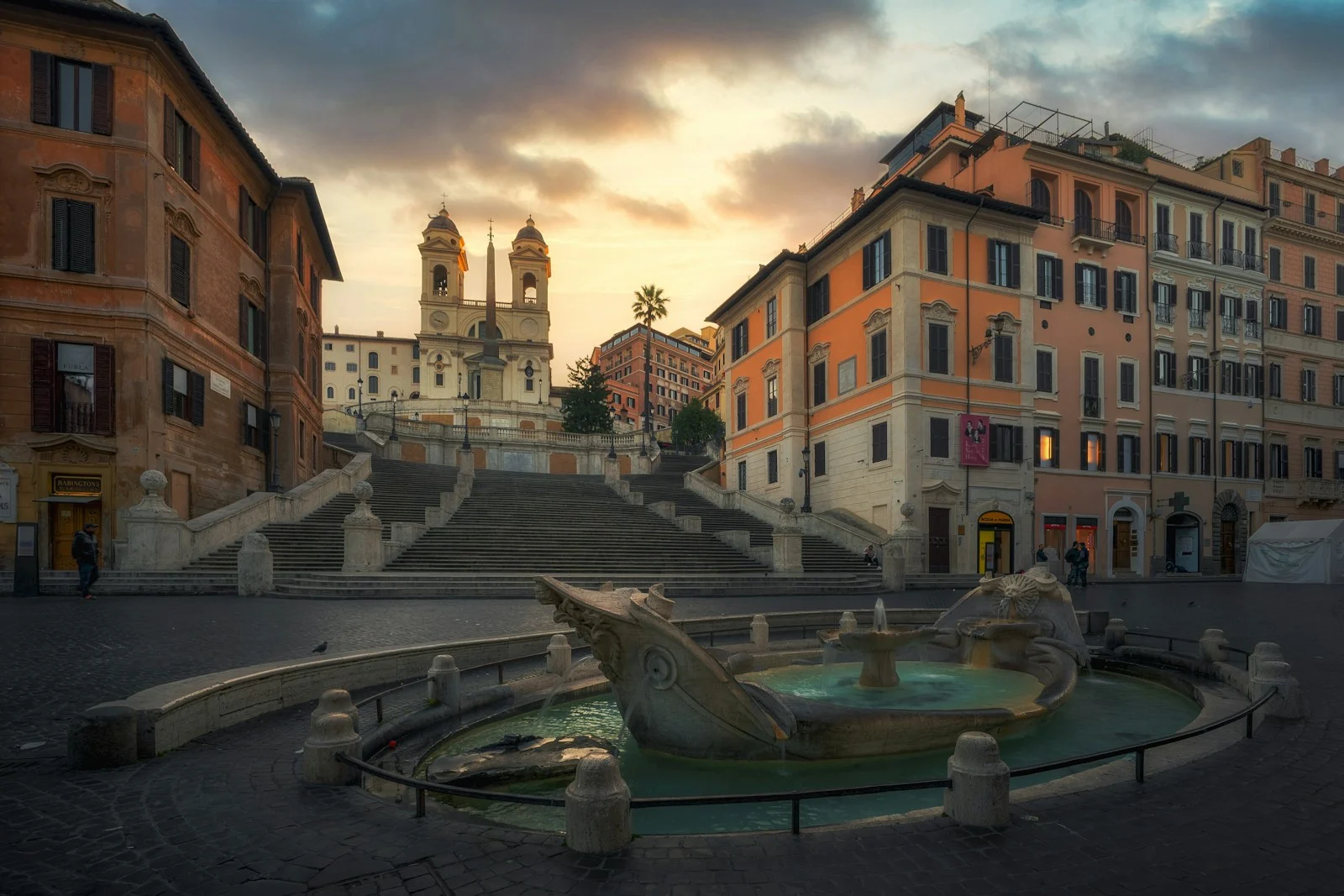
The author was Pietro Bernini, father of the Gian Lorenzo Bernini who later built half of baroque Rome.
What is here besides the steps
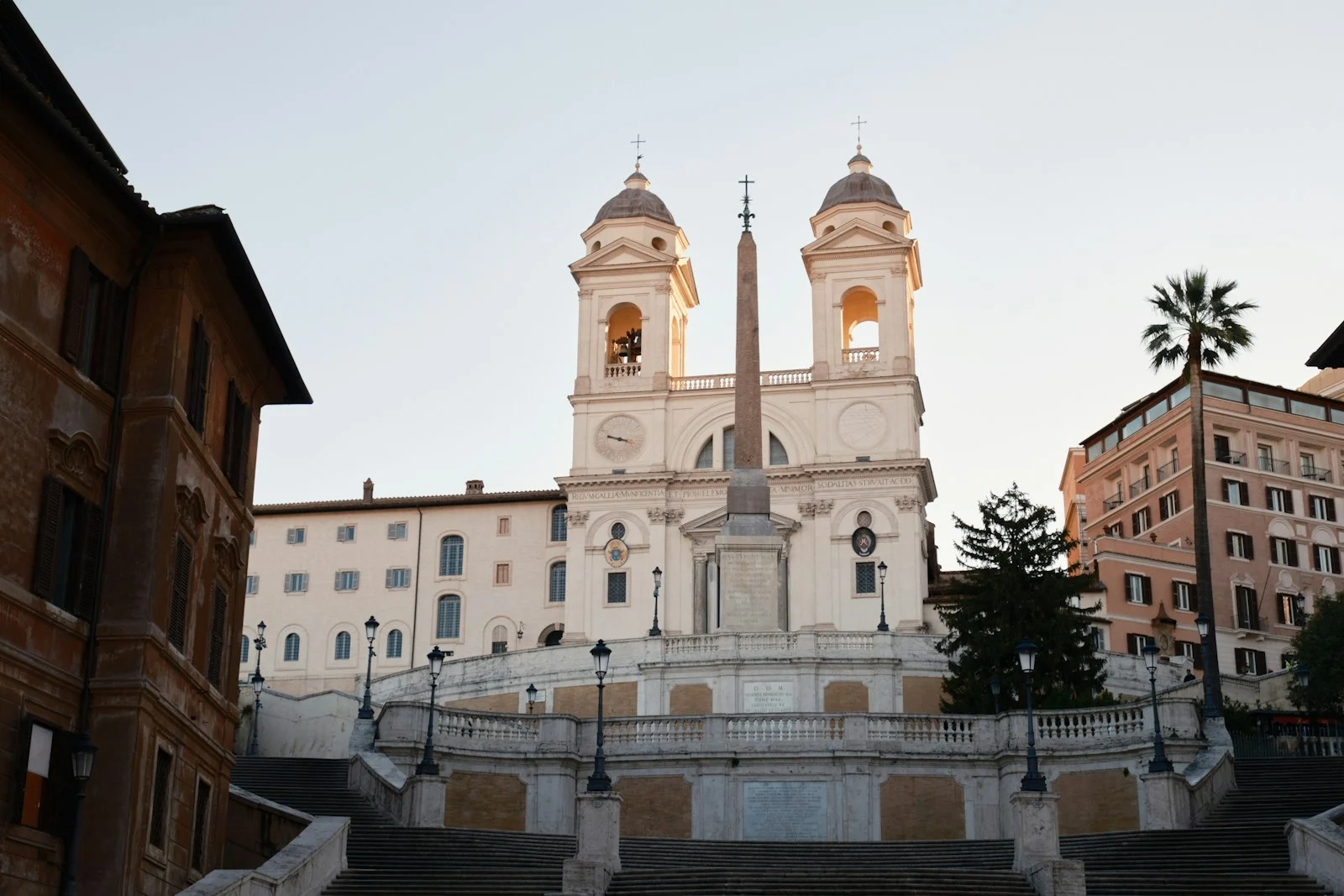
- The church of Trinità dei Monti at the top, with an Egyptian obelisk in front of it. Free to enter, with a good view down.
- The Keats–Shelley House — to the right of the steps, in the house where the English poet died. Small and quiet, dull for children, interesting for grown-ups.
- Azaleas in April and May. For those weeks the steps are lined with pots of flowers and the staircase becomes the postcard.
Getting there and when to go
Metro Spagna, line A — the exit leads straight to the square. Bear in mind that the lift from the station up to Trinità dei Monti does not always work: the operator publishes a page listing lifts out of service, and it is worth opening the night before. The details are in our guide to the Rome metro, tickets and opening hours.
Go early in the morning or late in the evening: by day the steps are crowded even out of season. And note that the most expensive shopping street in Rome starts at the foot of the steps — Via Condotti. There is no reason to turn into it with children.
This mistake is one of seven that spoil a day in Rome; the other six are collected separately: seven mistakes that spoil a day in Rome.
The quest tour “Formula of Italy”
Three hours through the baroque centre: the Spanish Steps, the Trevi Fountain, Piazza Navona, Piazza del Popolo. Children hunt for clues on the squares and work out why the city needs so many fountains.
EUR 250 per group of up to 5 · each additional person +EUR 20 · 3 hours · ages 6+ · entry tickets and city fees not included
Frequently asked questions
Why can't you sit on the Spanish Steps
The ban came in with a city regulation in August 2019: the staircase is an 18th-century monument, and the stone is worn away quickly by constant sitting, food and drink. Officers come over and ask you to stand; damage carries a fine.
What is the fine for sitting on the Spanish Steps
For sitting alone you are usually just asked to stand up. Fines are for damaging the monument and can run to several hundred euros — the exact sum depends on what you did.
How many steps are there
135. They were built in 1723–1725 with money left by a French diplomat and lead from Piazza di Spagna up to the church of Trinità dei Monti.
Where can you sit nearby
On the rim of the Barcaccia fountain at the foot of the steps, on Piazza Navona, on Piazza del Popolo and on the Pincio terrace above it. All of them are within a fifteen-minute walk.
When do the azaleas flower on the steps
In April and May the steps are lined with pots of azaleas — the only weeks of the year when the staircase looks the way it does on postcards.